Could stuff be living on Saturn’s moon?
Wednesday 14th Jan 2026, 12.30pm
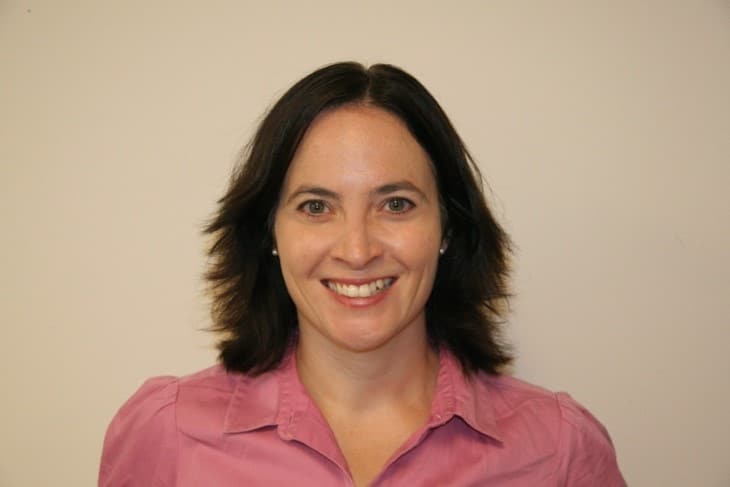
Are we alone in the Universe? It’s surely one of the biggest questions out there. In our first episode of 2026 we chat to Dr Carly Howett, Associate Professor of Space Instrumentation in Oxford’s Department of Physics. Specialising in the study of the ‘icy worlds’ found in our outer Solar System, Carly explains why she thinks one of Saturn’s moons, Enceladus, could be a prime candidate for life, and shares the latest updates on how we might find it.
[Music]
Emily Elias: Finding life on other planets is kind of like being an interplanetary detective. You’re looking for tiny clues in a sea of data that will make you go, huh, wait a second, I think I found something.
On this episode of the Oxford Sparks Big Questions podcast, we’re asking, could stuff be living on Saturn’s moon?
Hello, I’m Emily Elias, and this is the show where we seek out the brightest minds at the University of Oxford. And we ask them the big questions. And for this one, we have found a researcher who is ready to hunt for life on other planets.
Carly Howett: So my name is Dr Carly Howett. I’m an Associate Professor of Space Instrumentation at the University of Oxford, which means I do all sorts of things, but one of them is to try and understand what’s going on in the outer solar system, particularly on icy moons. That’s my, that’s my jam.
Emily: I love it, I mean, my mastermind subject. Definitely not be moons and icy moons. So you’re really gonna have to help me out here. What moons are we talking about when we’re thinking about Saturn? I’m sure there are a bunch up there.
Carly: Oh. There are. I think there’s something eighty something moons around Saturn, but I’m really focusing on the big ones. And I’m really focusing, for this research, on Enceladus, which is a pretty small moon actually. It’s about the same size as the UK across. So sort of from the edge of Wales or Cornwall over to East Anglia. But it’s far enough away from Saturn that it’s sort of in this really nice zone where it still gets this heating from Saturn, but it’s far enough away that it hasn’t been pulled in and destroyed. So one of the things that we see from it, or we saw with Cassini data that was a NASA mission that was at Saturn for a very long time, was that there was activity from its south pole, and that was in the form of these jets, these water ice jets and other bits, too, that would burst out of its south pole and kind of go off into space. And since that discovery, we’ve been trying to understand a little bit more about it ever since.
Emily: Okay. So tell me about this moon, then. What? What is it like on the surface that makes it so sort of, like, special and potentially having some life hanging out on there, because it sounds like pretty small. That feels like you’ve not got a lot of surface area to hunt for things.
Carly: Right. So so the surface is incredibly cold, right? There’s very little atmosphere. So really it’s it’s water ice facing space. So very, very cold. Bit warmer in the sunshine. Bit colder when it’s not of the order of about fifty kelvin, which is lots and lots and lots below zero. But we know it has liquid water underneath the surface. And so there’s lots of ways that that’s been got at. And so we know that there’s liquid water ocean between something like five and twenty five kilometers beneath the surface. Right. And there is a good chance for life. Right. So although it’s going to be dark, right, light isn’t going to be able to penetrate five kilometers of ice, but it will have heating from its interior. So as Enceladus moves around Saturn, its orbit is a bit like an oval, so sometimes it’s closer to Saturn and then sometimes it’s further away. And that distance, that different effect of gravity, because the distance is changing, squeezes and relaxes, squeezes and relaxes its core. And that heats it up a bit like a squash ball. If you’ve ever sort of squished and relaxed a squash ball ahead of playing or racquetball, ahead of playing that game, it’s a bit like that. So the interior is getting squeezed and relaxed, squeezed and relaxed every time it orbits. And that gives it this ongoing heat. And that heat percolates out through its solid core, through its rocky core, into this liquid water ocean and maintains the temperature of the water. Right? So, of course, it’s being cooled from above. It’s facing deep space, incredibly cold, but it’s being heated from below. And that means two things, really. One is it’s able to maintain this liquid water ocean, but two, it gives us an opportunity to think about whether life could exist there. Right. So we see that if you go to the bottom of the Earth’s oceans, like in the Mariana Trench, if you have geothermal activity. So if you have hydrothermal vents, we see life. So life doesn’t necessarily need light, it just needs energy. And so we know that it has energy. We know that it has liquid water. We know that it has the right source of composition to, you know, the carbon and the silicates that you need for life to happen. And so it could be happening on Enceladus. But there’s a few questions about, the basics are covered. Right. So life could be existing on Enceladus. So then you have to dig a little bit deeper right. Like how long has Enceladus been in this state for. Right. If the ocean is pretty new, that means that maybe life hasn’t had the chance to evolve yet. And that’s where this study kind of starts to feed into that, that question of habitability. And we’ve been looking at how much energy is coming off, because that tells us how sustainable that energy level is. And so how constant, you know, Enceladus is state might have been, which would give life a chance to develop.
Emily: What creatures are we talking about here? Are we talking about like a big giant sea monster living in the bottom of this chasm? Or like teeny tiny microscopic cell thingies.
Carly: Well, the quick answer, of course, is we don’t know. We haven’t been there. But if you do look at in the Earth’s oceans, things we see are sort of. They look like life. If you saw a picture of them, you’d go, yep, that’s life, right? One of the questions has always been about what constitutes life. Those sorts of questions. But lots of the stuff that’s in the depths of the Earth’s oceans is definitely life. It looks like crabs. It looks like lobsters, it looks like little shrimpy things and maybe something like that. So I think when we’re talking about life, to my mind, we’re thinking about little shrimpy things or little crabby things. But to be honest, we’ll take anything that’s wiggling really at this point.
Emily: Okay. So how do you find something that is wiggling?
Carly: It’s tricky right? So you do it carefully. Is the first is the first option. The last thing you’d want to do is to go there and completely destroy an ecosystem before you, you really even understand it. So back to sort of Star Trek’s prime directive, right? You don’t want to interfere and damage emerging civilizations. So one of the things we could do, there’s different options being put forward. So the next large class E-submission, that’s the European Space Agency will be to go back to Enceladus. And they’re thinking about what that might look like, whether it will include a lander, whether it’ll fly through the plumes, what instrumentation we need to carry with us in order to do that. And then other missions are being proposed to, say, just orbit Enceladus or really focus on understanding the plumes. And I think the plumes are really key for me here, because they give us this beautiful way of understanding what’s going on in that liquid water ocean, but without having to go into it, we don’t have to send a submersible through five kilometers of ice to sample the water. Instead, we can sample what’s being spat out of Enceladus, doing no harm at all to whatever environment is down there. And so that’s trickier in the sense that we’re not going to necessarily straight away see a shrimp, but we can start looking for those chemical signatures of shrimp, you know, [laughs] and so of chemical signatures of life, you know, that may point to it. So that’s a great first step, I think to to understanding what’s going on.
Emily: And by chemical signatures, what do you mean, like poo?
Carly: Wouldn’t that be brilliant. Um, my kids would love that. No, I mean, there are ways of looking at biological signatures that really point towards life is very hard to say. Absolutely. This definitely comes from life, but there are things that we see on the earth that are more likely to have come from life than less likely. And one of those things is the idea of chirality. You know that we have a left and a right hand that sort of you can put together, but aren’t the same. You know, if you put them on top of each other, they look different to one another. And so life is quite good at making signatures that look a bit like that. Other processes aren’t. So that’s something you could sort of start digging into and other things. So I’m not a chemist. Um, but there’s definitely sort of traces, but it’s never going to be a photograph of a wiggly thing, which is definitely where you sort of underscore it and say, life is happening, life existing. It’s a step towards finding that, but it’s also about just making sure that we’re doing this slowly enough that we’re not damaging it. Right. We don’t want to go in gung-ho and wreck something before it’s even got a chance to start.
Emily: Uh, speaking of slowly, I’m afraid to ask, what is the timeline of this? Like, when would we actually sort of get some sort of confirmation that, hey, maybe there is life on this moon?
Carly: Yeah. So the Enceladus lander or the orbits, the Easter one. Enceladus, it’s like an orbiter. Then it’s a lander. Wouldn’t be getting there until the 2040s. So already that puts us, you know, at this point, sort of fifteen to twenty years out. The reason for that is because they’re planning on going back with just solar panels. So no nuclear material. And so you need the South Pole to be in sunlight, to be able to take your observations, to be able to charge your batteries, your solar panels. And that doesn’t happen for a very long time. Okay. So Saturn is a long way from the sun. It has this very slow season. So we’ve got to wait some time on the South Pole being visible. There are some proposals that are being put forward to other organizations like NASA. They are still in the proposal stage, so nothing’s been selected. But I think it’s a prime candidate and it’s definitely on the list to be explored. But none of those have been selected yet. So realistically, you know, even if one were selected tomorrow, that’s still going to take time to build. And Saturn’s a long way away, right? So you’ve still got to get there. So we’re probably looking at at least ten to fifteen years for that as well. So it’s not going to happen soon. But I think the fact that it’s in the planning stages is certainly just moving as closer in space science, everything certainly in planetary science, where you’re looking at the outer solar system, you have to learn to be patient. Nothing happens very quickly. It’s not the moon. We can’t get there in a few days. So I think making sure we’re going back in the right way with the right instruments and observing this in a way that’s sustainable but also gives us some really great science, is worth taking our time and thinking about.
Emily: So in this sort of lag time that you now have at your feet, uh, what are you going to be working on before you actually are able to get data results back from the moon?
Carly: Well, of course, yeah, there’s there’s no such thing as a downtime, really. So there are a few different things. So I’m on the payload working group for ESA and so we’re currently in the process of trying to figure out what instrumentation to send back. And that’s very active right now. So we’re talking to people in different EU member states and figuring out what technology do we currently have, what technology do we need to develop to do this well. So that’s something that’s going on. Of course we have all this data that came back from Cassini. Some of it still has lots of it still hasn’t been analysed. And so we’re sort of still working our way through this data set. And there’s terabytes and terabytes of data. So there’s still a lot to be learned from old data. And then of course there’s ground based observing and space based telescopes that are taking observations right now. You know, the James Webb Telescope has taken some great observations of Enceladus. And so that those data sets will continue to be of use. But one thing that’s worth noting is Enceladus has a sister moon called Europa, which is at Jupiter, which is very similar in lots of ways. It has an icy shell on the surface, a liquid water ocean, and it’s orbiting a gas giant and there are missions en route to go and see Europa right now of course. Europa Clipper is a NASA mission that is focusing on Europa but JUICE, which is a European mission, which is focusing on a different moon of Jupiter, will also take quite a lot of Europa data as well. So by learning about something about its sort of cousin or its sister moon, we’ll also, by inference, be able to learn something hopefully about Enceladus as well. So there’s quite a lot going on, it’s not all, you know, twiddling our thumbs until 2040s. But it’s just taking those different tacks.
Emily: If you find an alien life form, have you thought about what you would want to name it?
Carly: Oh, that’s such a big question. Oh, I don’t know. Wouldn’t it be brilliant to just call it something like, really standard, like Dave? Like that would annoy my brother, that’s my brother’s name. I think, Dave, Dave.
Emily: Dave. That sounds great. Yeah.
[Music]
This podcast was brought to you by Oxford Sparks from the University of Oxford, with music by John Lyons, and a special thanks to Dr Carly Howett.
Why don’t you pitch us a big question for this podcast? We are always dying to hear from you. We are on the internet at Oxford Sparks or you can go to our website, oxfordsparks.ox.ac.uk.
I’m Emily Elias. Bye for now.
[Music]