What’s the origin of water on Earth?
Wednesday 14th May 2025, 12.30pm
With more than 70% of its surface covered in water, Earth is rightly known as the “blue planet”. But where did this water – so essential to life – originate? While some theories suggest that hydrogen was delivered to Earth from space via asteroids, new research indicates that the building blocks for water may have been present on our planet all along. We chat to Tom Barrett from Oxford’s Department of Earth Sciences to find out more.
[Music]
Emily Elias: There is a lot of water on this planet. In fact, the Earth is seventy-one percent water. But where did it all come from? Well, there might be a clue. And it just so happens to be over four billion years old.
On this episode of the Oxford Sparks Big Questions podcast, we’re asking what’s the origin of water on Earth?
[Music]
Hello, I’m Emily Elias, and this is the show where we seek out the brightest minds at the University of Oxford, and we ask them the big questions. And for this one, we have found a researcher who loves looking at rocks.
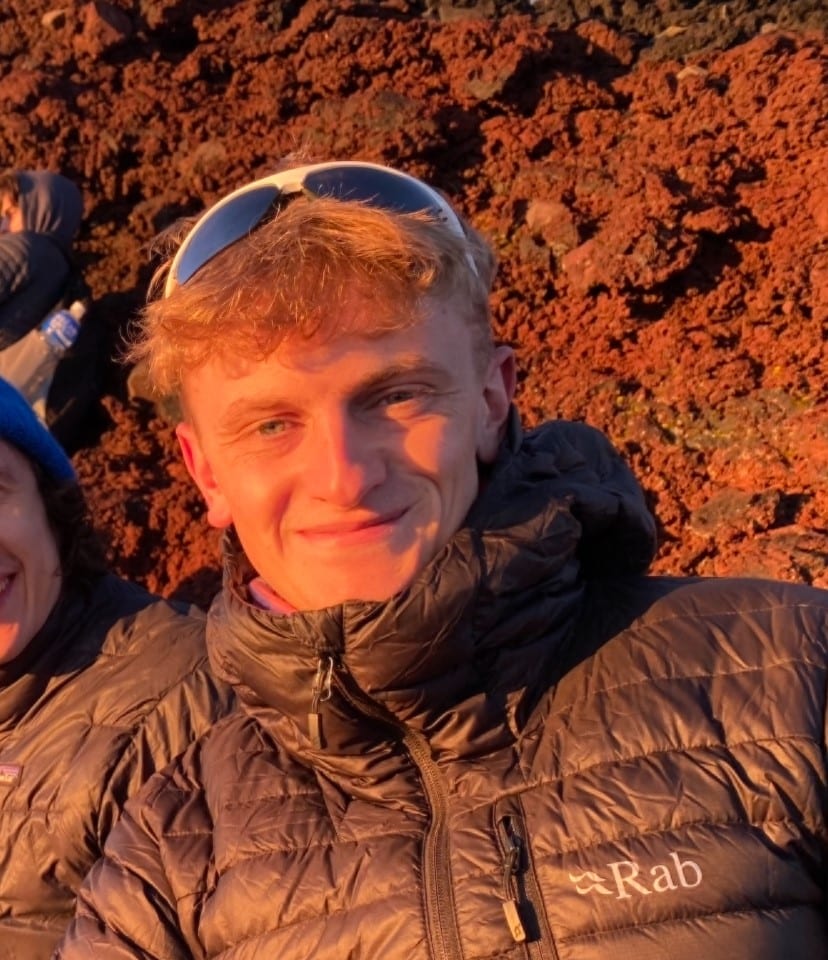
Tom Barrett: My name’s Tom Barrett. I’m a second year DPhil student in the Department of Earth Sciences. And for my PhD project, I look at the origin of water on Earth. So, the way that volatile elements were delivered to Earth, how planets form, um, what that means for planets today.
Emily: So you’re obviously not been looking at this for a hundred years or so, but other scientists maybe have. What do we know about the big origin story of Earth’s water?
Tom: Up until this point, that’s a good question. And it’s a very important one, obviously, because water on Earth is crucial to life as we have it today. And in all honesty, the way that water was delivered to Earth is not actually very well understood. Um, despite being probably one of the bigger questions.
So up until very recently, the prevailing theory among planetary scientists was that Earth formed from this space material, which is called enstatite chondrites, and that that material was dry. So, it didn’t contain water, it didn’t contain hydrogen. Um, it contained a few other volatile elements, but not really enough to kind of explain what we see today. And these bodies kind of came together. They created a dry planet. And then at some point later on in Earth’s history, it was hit by other meteorites, comets, that kind of thing. The stuff that you see in cartoons that’s covered in ice and all that kind of stuff, and that’s what delivered water and hydrogen to Earth. So, in that kind of model, the fact that water is on Earth today is a little surprising. And it’s it makes us quite lucky because, you know, the material that we actually formed from shouldn’t have given us water, but we were very lucky to be hit by stuff later in our history.
Emily: So all these things had to come together to create this sort of cosmic explosion that then delivered us all this water.
Tom: Exactly. Yeah. And I mean, that kind of makes sense. As far as we know, there’s no other life anywhere else in in the solar system or even beyond. So, the fact that water on Earth is potentially unique in itself kind of makes sense in that.
Emily: And is everybody sort of subscribed to this theory, or have there been sort of like people who’ve taken issue with it?
Tom: There’s a there’s a lot of discussion, as in many other aspects of science. So, there’s a number of other ways that you, in theory, could deliver water or hydrogen to a planet. So, one of the popular suggestions in the past, which has kind of gained a bit more traction recently, is that Earth actually could have kind of absorbed its hydrogen from the solar nebula atmosphere. So, when Earth formed in its early history, it kind of existed in this big cloud of hydrogen. And there’s one suggestion that if Earth was really hot, this hydrogen could kind of gas into Earth.
Um, we don’t think that’s super likely, but it’s certainly a way that planets like Mars could have acquired hydrogen in water. And then there’s also the suggestion that Earth may have actually formed with the water in the hydrogen in the first instance, which is the research that I’m doing. And that’s something that’s not been hugely popular in the last few years but is starting to gain traction now.
Emily: Okay, so tell me about the research that you’ve been doing. What is your sort of like hypothesis to throw into the mix?
Tom: So my project, which started as an undergrad, basically looks at the material that we think formed Earth. So when we compare it to Earth across a range of sort of chemical markers, it looks almost identical to it. So we look at things called isotopes. And across every element that we measure, these meteorites, enstatite chondrites, are identical to Earth. So a lot of people think that’s probably what created Earth in the first instance, although that is another debate entirely.
So what I did was basically look at this meteorite to see actually, does it contain any hydrogen? The prevailing thought up until then had been no, because we can’t really see any, obviously. And there’s no sort of if you break this rock down into just the compounds that exist, none of them are, you know, there’s nothing like water in there that’s very clearly hydrogen bearing. But actually, we found that there was significant hydrogen in there, which was a huge surprise and kind of massively shifts the way that we think hydrogen and therefore water could have been delivered to Earth.
Emily: So tell me about this meteorite. Where does it come from? Why is it so important into sort of trying to unlock this riddle?
Tom: So the meteorite that I worked on is called LAR 12252, which is it’s not a catchy name, but these names basically describe where and when it was found. So, the bulk of meteorites that planetary scientists sort of do their research on are from Antarctica, which is because, I mean, a couple of reasons. Firstly, Antarctica is a desert. So, despite the ice sheet, it’s dry. So, any meteorites that fall there can kind of survive there for a long time without being destroyed. So, if a meteorite fell in my garden, now chances are it would rain this afternoon and most of it would dissolve and it would be fairly useless for research. But these ones in Antarctica can kind of sit on the ice there for thousands, millions of years without being too badly damaged. It’s also quite a lot easier to see them. There’s not a lot happens in Antarctica and it’s just a big white surface. So typically, when these groups go and look for them, if they see rocks on top of the ice, it’s probably a meteorite. And ice actually moves in kind of predictable directions, and it starts to pull all of these meteorites together in little clumps. So, every year, American teams go out and search and they come back with hundreds, thousands of meteorites, which are invaluable to planetary scientists.
The specific group that I work on, enstatite chondrites, we think they created Earth, but they actually only represent about two percent of the meteorites that we have on Earth today. So, they’re relatively rare. They’re not the kind of, you know, if one did fall in my garden this afternoon, it probably wouldn’t be an enstatite chondrite, right? Which is a shame for me, because that’s the one I want to look at. But it means there’s not a lot to actually do this research on. So, they’re a little harder to get your hands on. So, you have to apply to a body in America to be sent them. And then when you do get given them, there’s only certain things that you’re allowed to do and can’t do. So I’m not allowed to destroy any of the samples that I get, for example.
Emily: And so these meteorites, these are sort of like thought to be pieces that were there, billions and billions of years ago when the Earth was being created?
Tom: Yeah, we think so. So, it’s hard exactly to know what they would have looked like 4.6 billion years ago because obviously they, like Earth, are prone to sort of changing and evolving in some ways. But as far as we can tell, the chemistry is almost identical to Earth with a couple of small exceptions. So, they represent what we consider the kind of the best candidate for Earth’s building blocks. So as with sort of all aspects of planetary science, we’re talking about things that happened 4.6 billion years ago. And if anyone tells you that they know this happened, they’re lying, because there’s really all we can do is look at chemistry and models and that kind of thing and sort of pull all of the data we have available to make the best prediction about something that happened a really long time ago. And, you know, more and more evidence starts to stack up in support of certain things. We become more confident, but it’s kind of impossible for us to ever exactly know what happened such a long time ago.
Emily: So how did you analyse this rock, then?
Tom: Like I said before, hydrogen is unbelievably difficult to kind of measure, especially in relatively low concentrations. It’s the lightest element in the periodic table. So, a lot of the kind of traditional analytical methods aren’t very good at measuring things that are so light. If you were trying to measure iron or something, it wouldn’t be a problem. But hydrogen is much more sensitive, and a lot of techniques just don’t really work. So, the kind of reason that I even got onto this question in the first place was because a group in France a couple of years prior had actually measured the total hydrogen concentration in this meteorite, which is a little easier to do. You can kind of just crush the whole meteorite up and see what comes off. And they found a surprising amount of hydrogen. But when they went into the meteorite specifically and looked at the different kind of things that make it up, so they couldn’t find hydrogen anywhere. So, they looked at all of the phases, we call them, that are typically rich in hydrogen. And none of them had it. So, they found this sort of one hundred percent total, and they were able to account for about eighteen percent of the total. So, there was this big question of this potentially dramatically alters the way we think about hydrogen being delivered to Earth. But we can’t really trust it because as far as we know, that could be hydrogen that was added to this meteorite when it was sitting in Antarctica. So, we started looking at more interesting ways that we could analyse these phases to see if they contain hydrogen. And one of the unique things about the enstatite chondrite meteorite that I work on is that it’s really rich in sulphur, and it has a lot of phases, again, these kind of compounds in there that are bonded to sulphur that don’t exist anywhere else ever. There’s a bunch of things in this meteorite that we just don’t find on Earth. We used a technique called sulphur XANES.
Emily: What on Earth does that mean?
Tom: Yeah, it’s sulphur X-ray absorption near edge structure spectroscopy. It’s a bit of a tongue twister.
Emily: Yeah. That’s like, feels like an SAT test question for me.
Tom: And so it is super cool, but unfortunately, you can only really do it if you have access to a synchrotron, which is basically a big particle accelerator, which is very cool, but it’s not exactly like a, you don’t have one lying around the backyard with the meteorite.
Emily: Yeah. You can’t do this in your garage.
Tom: Um, so we had to apply for time. And we’re really lucky here in Oxford that there’s a synchrotron super nearby at Diamond Light Source. So, we went over there in November 2022. And basically, what you do is from our perspective, you shine a beam at the sample and what’s actually happening is that particles are being accelerated around this massive ring until they get to incredibly high speeds, and then they fire towards your sample. And when they hit the sample, there’s an interaction of these particles with the electrons that sit inside your sample. So, in my case, the meteorite. And the energy of the electrons can tell us a little bit about how sulphur is bonded within a sample. And we had a theory going in that we thought sulphur might be bonded to hydrogen, which was a little bit wacky. It hadn’t really been suggested too much before, but it turned out that was the case. And when we looked across the meteorite, we found that sulphur was bonded to hydrogen almost across the entire thing, in concentrations that we think is capable of explaining all of the water we see on Earth today.
Emily: So that’s a pretty huge deal.
Tom: Yeah, it’s a, it’s a cool discovery.
Emily: How did it feel to sort of go from a wacky idea to a huge discovery?
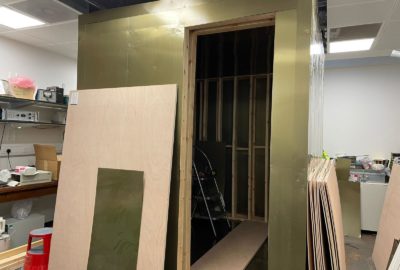
Tom: Yeah, it’s a, it was an interesting feeling. And I don’t know, I’ve got to give a massive shout out to my PhD and undergrad supervisor, Professor James Bryson in the Department of Earth Sciences, who’s been kind of invaluable throughout this this whole project up to this point. But yeah, it was a very exciting feeling. That first day when we were we were sat in the hut at Diamond Light Source, you call it, which is just a little room next to the lasers. Um, we started seeing these spectra come in that had a peak in the place that we were hoping to see it. And you kind of realise that, you know, this is a discovery that does potentially alter our theories of how water is delivered to Earth, which is quite exciting.
Emily: I’m obviously not a big bad scientist like you. So, can you explain this to me? Like, how does this sort of expand our knowledge or change how we think of the origin of water came to be on Earth?
Tom: So in most simple terms, it potentially means that it’s not that surprising that Earth has water today. So, we used to think that water was delivered to Earth through these really kind of fortunate chance bombardments of hydrated material. And if that was the case, then Earth was really lucky. Maybe it was unique. But what our study suggests is that actually Earth probably formed with all of the ingredients it needed to create water right from its very onset. So the hydrogen in these meteorites, we think, can explain the kind of volume of oceans on Earth ten times over, which is far more than you need. And it probably means we’re just not as, uh, not as lucky or as fortunate as we thought we were. And that potentially extends to Mars as well. We think Mars formed from very similar material to Earth. We have evidence that Mars actually did have water on its surface billions of years ago. And potentially what this means is that actually Earth and Mars formed in quite similar ways. And the reason that we have such vibrant life today on Earth and Mars has not, we think, is something that happened in their evolution, rather than in their initial formation.
Emily: That’s crazy. So I guess this raises a ton more questions for you to now explore.
Tom: Yep. Yeah, I’ve got my work cut out over the next few years of my PhD to try and explain it really, because it’s a it’s a very cool discovery and we’ve got some ideas of how we think it all happened, but it’s now time to really explore all of the meteorites we have. See if it’s the same. Do they all have hydrogen? How did that hydrogen get in? And what does that mean for our models of the early solar system and the material that was forming?
Emily: Oh, yeah. You know, just, you know, something you do on a Thursday…
[Music]
This podcast was brought to you by Oxford Sparks from the University of Oxford, with music by John Lyons. And a special thanks to Tom Barrett.
Tell us what you think about this podcast. You can find us on social media at Oxford Sparks or go to our website. You know it by now, OxfordSparks.ox.ac.uk.
I’m Emily Elias. Bye for now.