What happened to the birds in ‘The Twelve Days of Christmas’?
Wednesday 10th Dec 2025, 12.30pm
We all know it. We’ve all sung it. Perhaps we’ve even answered a quiz question about it*. The Twelve Days of Christmas has become as quintessentially festive as a figgy pudding, or the bad joke in your Christmas cracker. But why exactly is your ‘true love’ gifting all these birds? And importantly, how are they faring nowadays? Prof Andy Gosler (from the Edward Grey Institute in the Department of Biology, and Institute of Human Sciences in the School of Anthropology) is the only professor of ‘ethno-ornithology’ in the world, specialising in the study of the relationships between birds and people. So, who better to be our guest on this festive edition of the Big Questions Podcast, where we take a deep dive into one of our favourite Christmas carols?
(*There are 364 presents in total, by the way!)
Emily Elias: The Twelve Days of Christmas features a lot of birds. Let’s run them down. Seven swans a swimming. Six geese a laying. Five golden rings. Okay, not birds. Four calling birds, three French hens, two turtle doves and a partridge in a pear tree.
But in 2025, what’s life like for these birds? On this episode of the Oxford Sparks Big Questions podcast, we’re asking what happened to the birds in The Twelve Days of Christmas?
Season’s greetings. I’m Emily Elias, and this is the show where we seek out the brightest minds at the University of Oxford, and we ask them the big questions.
And for this one, we have found a researcher who loves some festive fowl.
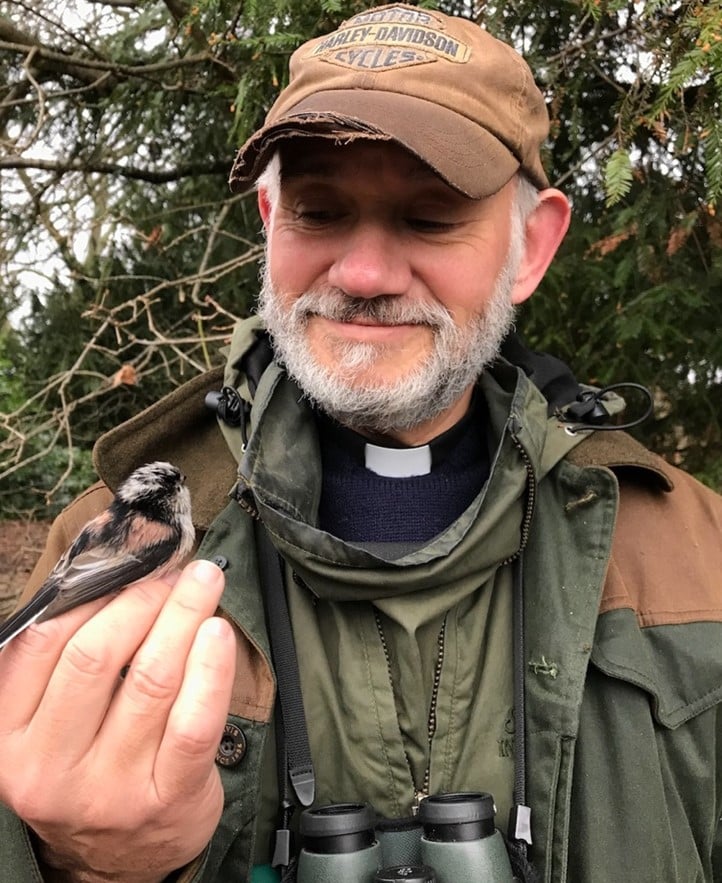
Andy Goslar: I’m Andy Goslar, I’m a Head of the Institute of Human Sciences at the University of Oxford, but I’m also Professor of Ethno-ornithology. As far as we know, the only one in the world.
Emily: Ethno-ornithology is a mouthful. What the heck is it?
Andy: Yes, so the ethno is like ethnobotany, like ethnography. It’s sort of implying anthropology. And the ornithology, of course, is the study of birds. So, it is the study of the relationships between birds and people.
Emily: Wow. So, you’ve got a lot on your plate and so obviously for Christmas, we decided to burden you with more, um, and we were thinking…
Andy: Bless you…
Emily: …We were thinking about The Twelve Days of Christmas. It’s got a ton of birds in it. You obviously came to mind. So we’ve got seven swans, six geese, four calling birds, three French hens, two turtle doves, a partridge in a pear tree. Why is this song so bird centric?
Andy: Uh, well, the simple answer is that nobody has the faintest idea. And when you invited me to have this conversation, of course, I went and googled The Twelve Days [of Christmas] because I know the song, everyone knows the song. It’s a lovely sort of Christmas carol, and tried to find out something about its history.
It seems to have been first written down in the eighteenth century. The words have changed quite a bit, and for me, I might as well make a suggestion as to why it’s sort of bird heavy, because nobody can prove me wrong and nobody seems to have a better, better answer.
It’s just that birds are extremely significant for people, and with the birds in question are quite interesting because you’ve got a kind of combination of there’s some wild species like turtle dove, which, incidentally, would never be in the British Isles in the winter at Christmas because it’s a migrant, breeds here, migrates to West Africa for the winter. So you’ve got some wild species, and you’ve got some domesticated, like the geese, one presumes.
Emily: But at the eighteenth century, when this was sort of coming into vogue, shall we say, these were sort of like your key British birds that people really sort of like, identified with culturally or at least had a good sort of knowledge of…
Andy: They would have a knowledge of them, but they wouldn’t necessarily be their most salient birds, the most iconic bird today, and I think probably in the eighteenth century as well, is the robin.
You know, just a few years ago, it was realised that we didn’t have a national bird. Britain seemed to be unique in not having a national bird, and so in good sort of democratic fashion, took a vote on it. And everyone said, well, it’s the robin, isn’t it? Because everyone had thought the robin was our national bird anyway. So it’s a rather odd collection of birds in in the song.
I just want to say something about the partridge in a pear tree, because there’s a lot of speculation, which you can find on Wikipedia, for example, about what this. And it just struck me a few years ago that maybe this is a pun, because partridge in French is perdreau…
Emily: So a little play on words…
Andy: Yeah, I think it’s a pun actually. And there’s a lot of references to French and the well, to French and to the French. Um, the French hens, for example. And there was a tendency with unusual birds to call them a French something or other.
Emily: And so we just kind of lazily called it French. It’s different French, French.
Andy: It it’s different. It’s foreign. It meant it’s a foreign thing. Yeah. Yeah. It’s not quite right, how it, how it should be.
Emily: Okay. So eighteenth century. Long time ago. What kind of state are these birds in, currently in 2025 in the UK? Can we maybe start with, like the partridges, the turtle doves, the calling birds? Where are they at?
Andy: Yeah yeah, yeah. Oh it’s such, it’s all sort of doom and gloom. It’s pretty miserable.
Emily: So what’s going on with the grey partridges?
Andy: Um, they’re fairly desperate, and, used to be very, very common. So I am the age I am. But when I was a kid, I grew up in, in West London, and I remember seeing in fields in London coveys of partridges. So a flock of partridges is known as a covey. Coveys of partridge. of a grey partridge of thirty birds or more. You know, I can go a whole year these days without being able to see a grey partridge.
Emily: I mean, I don’t want to draw a drastic contradiction to our ages, but I don’t think I’ve ever seen a partridge in a park in London.
Andy: No. Well, exactly, exactly. But, you know, in the nineteen seventies. Yeah. The sort of official line is that there’s no competition between regular partridge and grey partridge. But it is interesting that the decline in grey partridge has gone along with this increase in red legs, which are now kind of everywhere. So I’m not sure I, I quite believe that. There may be other things going on in our countryside, like the loss of insects that the partridges depend on.
Emily: And then what’s going on with the turtle doves?
Andy: Yeah. turtle dove. A lot of these changes are due to agricultural change. So from the early 1970s, the real intensification of agriculture, it does go along with us joining the what was then called the European Common Market and the Common Agricultural Policy, which was a pretty disastrous one sort of policy for the whole of Western Europe, or at least all member states.
But that went along with the great industrialisation of farming – pesticides, herbicides, less spilt grain in farmyards that the sparrows depended on, that sort of thing.
And, you know, I’m not saying that that was due to joining Europe, because I’m sure that would have happened anyway, but it had pretty disastrous consequences for a lot of our birds. So that’s the story for the turtle dove. But also, they’re overhunted in North Africa, so our poor turtle doves get hit both ways.
Emily: The calling bird a calling birds or colly birds, depending on which version of the song. But the colly birds are blackbirds. That was an old name for blackbird, which, incidentally, if people were desperate in the winter, it wasn’t uncommon for people to eat blackbirds.
Blackbirds now – so we have a kind of traffic light system for the conservation status of birds in the UK, and most of these things are either red listed, so serious conservation action needed or amber listed. And I’m not quite sure where blackbird is this week. It has been amber. It might actually be red because there’s a new virus that they’re suffering from, so we’re a bit anxious about blackbirds.
Emily: You’re not joking. This is really sounding very doom and gloom for The Twelve Days of Christmas birds.
Andy: It’s really serious. What comes after the calling birds?
Emily: So we got hens.
Andy: Oh, hens. Okay, well, the French hens are obviously domesticated, so moving swiftly on, then you’ve got five gold rings. Okay. And then six geese are laying, I think.
Emily: Yep.
Andy: Which are probably also domesticated. But there are wild geese in this country. Most of them come here from the winter. So from places like Svalbard. But somewhere around 1960, someone thought it might be quite fun to have Canada geese in this country and introduced them either by accident or on purpose, I think on purpose.
And we are now knee deep in Canada geese. And they’re quite aggressive. And that does have some consequences for other species.
Emily: So they’re invasive. Yeah. Invasive doesn’t sound good.
Andy: It’s not great. And we used to see more white fronted geese for example in the south in the winter and I wonder whether having all these Canada geese might be a bit of a problem.
Emily: So the final bird then would be our swans a swimming. Is there bad news for the swans?
Andy: No, actually. Well, except for avian influenza, which is a problem for a lot of waterbirds.
Emily: Uhhh
Andy: I think just at the moment, we’re not allowed to handle any wildfowl because of the risk.
Emily: So we’ve got the doom and gloom forecast where it’s not looking super great for a lot of our birds. Do you have a pitch for some birds in 2025 that are thriving? That would help in an updated Twelve Days of Christmas?
Andy: So we’re keeping the partridge in a pear tree. We’re keeping the two turtle doves. I want three red kites because they are the greatest conservation success story of the twentieth and now twenty-first century.
I’d have four cirl buntings because they’ve been massively reduced, but they are showing signs of recovery, as are corn buntings and yellowhammers, which have also declined because of agricultural change.
Five corn crakes. We normally say corn crake, but that is an old name for it as a landrail. They used to be incredibly common across the UK, keeping people awake at night with their irritating call, but now they’re just breeding in the Hebrides, in Scotland. But there’s a reintroduction programme in in Norfolk, and all those things suggest that changes in farming are getting better for the farmland birds, so we keep our fingers crossed there.
I’d have six lapwings laying, as the lapwings – sort of symbolic of all the lowland wet meadow species of wader species that breed – that historically were quite common.
So lapwings, snipe, redshank, curlew especially, all of which were quite common around Oxford in wet meadows when I moved here a bit over forty years ago and have declined massively. So we hope for change there, you know, with the improvements in farming.
Emily: Sending a Christmas miracle out to them.
Andy: Exactly. And then seven egrets walking that you think of it as, uh, different species rather than just the marching along. We used to just have two or three species. So there was the grey heron, bittern, if you were lucky enough to see one, just a few sites in the country. Now you can see bittern regularly at many sites and we’ve added little egret, great white egret, cattle egret, all breeding in this country. Glossy ibis, spoonbill is more common. And now white stork and actually common crane, unrelated to them, but similar kind of thing. A big thing with long legs, breeding for the first time in hundreds of years.
Emily: There’s like so many birds. There’s too many birds.
Andy: And that’s because of climate change, I should say. It’s not just the farming practices and land management. It’s because of climate change that all these continental species, like cattle egret, I mean, never would have thought twenty years ago even that we’d have egret cattle breeding here in huge numbers. It’s quite astonishing.
Emily: Go, egrets. Can I ask you, then would you mind ever so much to give me a rendition of all of your new birds?
Andy: Okay, so we’ve come down from twelve. [Sings] So seven egrets walking, six lapwings laying. five corn crakes, four cirl bunting, three red kites, two turtle doves and a partridge in a pear tree.
Emily: Oh my goodness, my holiday spirit is bubbling over.
Andy: Now everyone knows what a dreadful voice I have.
Emily: Thank you for being such a good sport.
Andy: Ah, no, it’s fine, it’s fine. Are you going to have fun at Christmas haven’t you?
Emily: This podcast was brought to you by Oxford Sparks from the University of Oxford, with music by John Lyons, and a special thanks to Professor Andrew Gosler.
Tell us what you think about this podcast or send us some festive wishes. Whatever you decide. We are on the internet at Oxford Sparks or you can go to our website, oxfordsparks.ox.ac.uk
I’m Emily Elias. Bye for now.