Why do I bite my nails?
Wednesday 29th Oct 2025, 12.30pm
Many of us will be familiar with Body-Focused Repetitive Behaviours (BFRBs), perhaps without even realising it. Such behaviours – which include hair-pulling, nail biting and skin picking – can not only cause physical harm, but also often bring feelings of shame. Because of this, open discussion around BFRBs has been limited. In this episode of The Big Questions Podcast, we chat to Prof Clare Mackay from Oxford’s Department of Psychiatry, who both studies and lives with BFRBs.
[Music]
Emily Elias: Confession time. I’m a nail biter – my mum, my sister – they have these really beautiful, natural nails. And me, I’m just doing my best not to draw attention to my fingers. And I’m not alone. On this episode of the Oxford Sparks Big Questions podcast, we’re asking, why do I bite my nails?
[Music]
Hello, I’m Emily Elias, and this is the show where we seek out the brightest minds at the University of Oxford, and we ask them the big questions. And for this one, we have found a researcher who’s digging deep into why we have these habits.
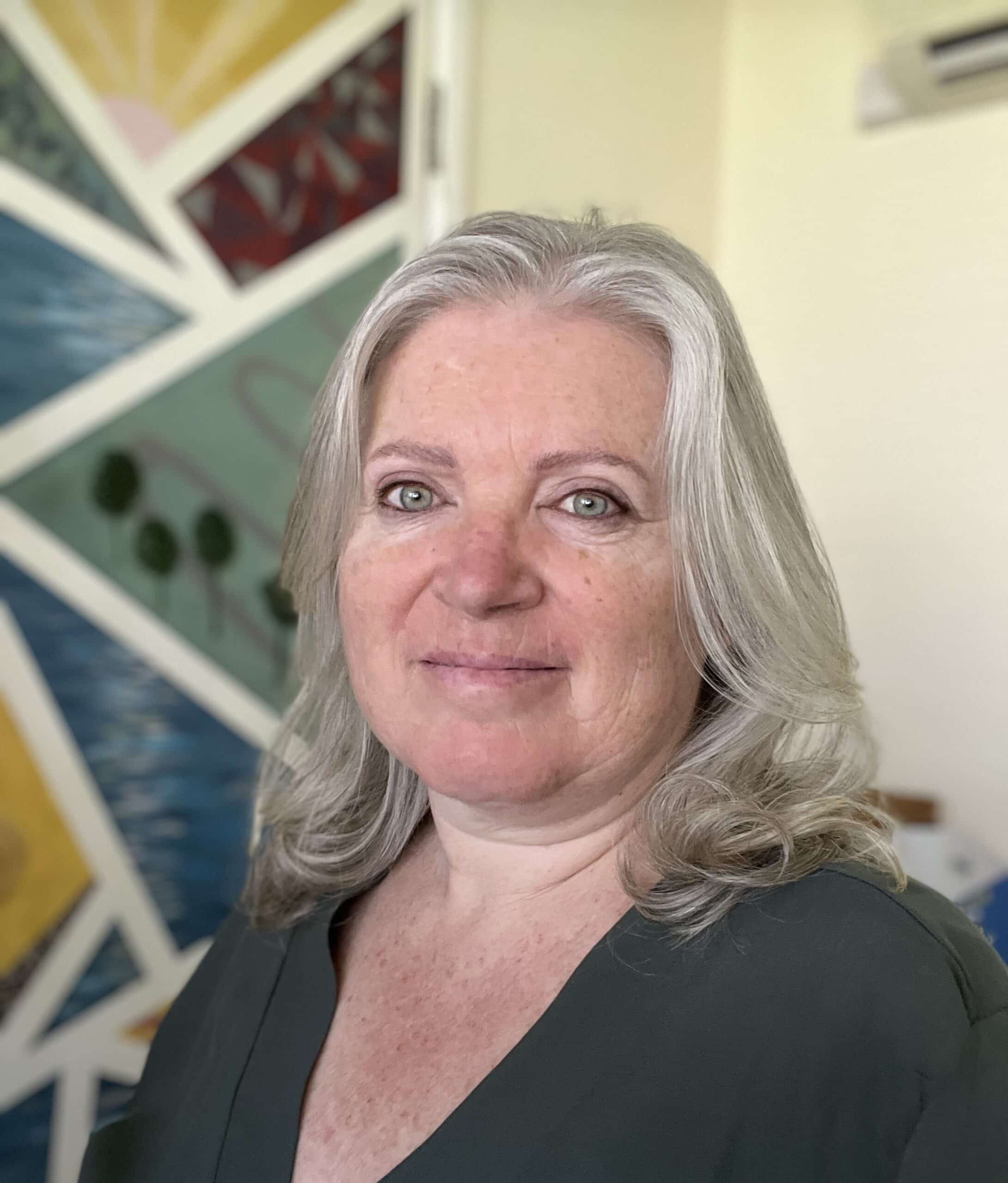
Claire Mackay: My name is Claire Mackay. I’m a professor of neuroscience here at the University of Oxford, and I study, live with and advocate for body focused repetitive behaviours or BFRBs.
Emily: Body focused, repetitive behaviours. So is this nail biting, this thing I have been struggling with since I was a kid.
Claire: This is nail biting, it’s nail biting, it’s skin picking, it’s hair pulling, and a whole range of other things, cheek biting, lip picking, hair cutting, like pulling at split ends. All the things that we find ourselves doing repeatedly that we probably don’t really want to be doing, but we find it’s very difficult to stop once we’ve started.
Emily: Why do we do this?
Claire: Well, the short answer is that we do it because we’re primates. And picking, pulling, biting behaviours are normal grooming behaviours for primates. Indeed, they are normal grooming behaviours for mammals and many other animals as well. But for some of us, for some reason, we kind of get stuck in a bit of a vicious cycle with our picking, pulling, biting behaviours, and that can cause some damage, sometimes even quite significant damage, and it can cause a lot of distress.
Emily: How many people does this dip from being like, oh, I’m a cheeky little casual nail biter to like, this has tipped into kind of ruining my life a bit.
Claire: So loads and loads of people bite their nails a bit, and it doesn’t really cause them much of a problem. But for some people, these behaviours, skin picking, hair pulling, nail biting, can become really big problems. And unfortunately, these behaviours are really highly stigmatised. So people feel that they can’t be open about it. They feel that they have to hide it. And it can cause people to sort of not feel able to live their lives to the full in some cases.
Emily: How do you know, as a researcher, how widespread a problem this is?
Claire: It’s a good question, and it’s harder to answer than you might imagine, because these behaviours are so stigmatised that people don’t generally ask. So they don’t appear. Questions about picking, pulling and biting don’t tend to appear on large scale surveys of mental health and wellbeing, for example, and you don’t tend to get asked about it if you visit your doctor. So we have to rely on research studies to estimate the prevalence of these behaviours and what that tells us. What we think we know from that is that the behaviours themselves are super common. Most people do them, or at least many people pick, pull, or bite a bit sometimes. But there’s probably about two to five per cent of us who experience problematic urges to pick and pull and bite where it’s causing significant amounts of distress and impacting the way we live our lives.
Emily: Can you just break down these urges for me? Like, how problematic can they be?
Claire: Well, for some people they can be very problematic. So some people might end up with large patches of missing hair, significant wounds and scabs and infections in their skin, for example. And in some cases it can be quite serious. In most cases it’s not like super serious in terms of the physical damage, but the psychological damage and the shame that people live with can really have major impacts on people’s lives and stop people feeling able to live their lives to the full. And this is something I’m very familiar with, because I have been a lifelong nail biter, and nail biting has never really bothered me very much, but when I was about twelve years old, I started to pull out my hair and that’s always bothered me a great deal. So I know exactly what it’s like to live with the distress of not being able to control urges to pull out my hair.
Emily: How do you describe that to somebody so they can understand what it’s like for you?
Claire: The best way, I think, to describe it to people who’ve never experienced these sorts of urges is that it’s a bit like scratching an itch. You know, when you have an itch and it’s bothering you and you’re trying desperately not to scratch it, and the harder you try not to scratch it, the worse the urge gets. That’s a little bit how the urges feel. But an important thing that I recognised along the way is that not all urges are the same. And so part of the problem that we experience is that we, as primates, we as animals, get stuck in sort of loops of behaviour sometimes, and breaking out of those loops of behaviour becomes really hard to do because we’re not really consciously aware when we’re doing it.
Emily: And so these urges, how do you categorise them in your head?
Claire: So I noticed when I started paying attention to my urges that they’re not all the same. Um, so I think of my urges in kind of three types. Uh, I have, um, the urges that most people most commonly think of, I would call them emotional urges. And so urges to pick, pull and bite definitely increase if you’re feeling stress or anxiety, you’re worrying about something, but they also increase if you’re kind of over-aroused in other ways. So I’m more likely to have urges to pick and pull and bite if I’m worried about something, but I’m also more likely to have them if I’m overexcited about something. So it’s a kind of state of over-arousal, and it’s a way of our bodies trying to calm ourselves down internally. So those are emotional urges.
And then, as I’ve already said, our brains are designed to learn patterns of behaviour and then execute them without checking in on our decision-making bits of brain. So these are the ones I call habitual urges. So that’s the because my body has learned this pattern of behaviour. I just find myself doing it without having any particular thing going on. It’s just a habit that my body has formed.
Emily: That sort of thing where all of a sudden you look down and you’re like, oh, I just bit all my fingernails off, and I didn’t even realise I was doing it.
Claire: Exactly. And you can even, of course, do quite a lot of damage and you didn’t even know you were doing it. And again, the shame that you feel after that is quite intense because you feel like these are my hands and I should be able to control them, but for some reason I can’t. And look at the damage that I’ve done.
And then the third kind of urges are the worst for me, and these are the ones I call the sensory urges.
Emily: What does that mean, exactly?
Claire: So these are urges that I feel in my skin, so that it feels like the urge to pull out a hair is coming from the follicle of the hair. So it’s the one that’s most like an urge to scratch, for example. So something is in your skin, on your skin, or in your skin, or something that’s aggravating your skin, and you have to scratch it because you can’t bear not to. It’s exactly the same as that. When I have a sensory urge, I have a feeling in a hair follicle and I cannot leave it alone. So for me, those are the worst. They come in kind of waves. So I’ll have a little storm of these urges over maybe half an hour, an hour or so, and then the storm kind of passes. But usually that’s when most of the damage gets done.
Emily: And when you’re having a sort of sensory urge, is that something that is quite unsettling and you can’t quite get your mind out of until you sort of deal with it?
Claire: Yeah. Um, and so many people with BFRBs experience something that we call a trance-like state. So it’s not exactly a state of distress. It’s more like a state of dissociation. You go into a bit of a kind of trance. You’re kind of not quite in the world. You’ve slightly checked out. And so you find that you’re kind of stuck in this cycle of picking or pulling or biting, and at some point you kind of emerge from this trance-like state. And again, that horrible feeling of shame that you get afterwards when you realise the damage you’ve done. But you weren’t entirely aware. Your awareness wasn’t in a normal state, so you couldn’t just stop it.
You can’t really react when people tell you to stop it. It’s not as simple as having made a decision to do something that you can then just make a decision not to. It’s something more interesting going on than that.
Emily: Well, you’re also a scientist, so I guess you have another angle of looking at this sort of habitual urge and this sensory urge and this emotional urge. Have you found anything that sort of explains this or helps you deal with it?
Claire: I have. So I’ve spent the last two years researching urges to pick, pull and bite and learning a lot about the mechanisms in our brain that set up these patterns of behaviour, how they get maintained, how they get stuck in a kind of vicious cycle. And I’ve been exploring areas of science that I hadn’t been into before. And one that I’ll use as an example is an area called psychodermatology. So this is the link between our brains and our skin. And when I first say that, you kind of go, brain and skin, that doesn’t sound right. Where does that come from? Until I point out that actually, we’re well aware of the link between our emotion system and our skin, because all of our emotions show on our skin. When we’re embarrassed, we blush. When we’re angry or frustrated, our hair stands on end. Our skin is actually a way that our emotions demonstrate themselves.
And so this link between the incredible complexity of the nerves that are in our skin and wrap themselves around the follicles of the hair and our emotion system, we’re only just starting to understand the links here. But of course, for people who suffer from things like psoriasis or eczema, the link between emotion and their skin problems will be very well known to them, because it’s very well known that those conditions are exacerbated when people are under anxiety or stress. This area of science is one that’s kind of just in its infancy, but there’s a huge amount more to learn. And I think the BFRBs belong in this area of science.
And I think that those urges to pick and pull and bite, particularly when it’s in relation to distress, are things that are observed across the animal kingdom. So it’s really common for animals who are in distress to over-groom, to pull out feathers, to pull out hair, to scratch at themselves or bite at themselves. These are ways in which animals try to soothe themselves. And there’s plenty more to learn in this area, but it’s an exciting opportunity to understand something that has previously just been kind of written off as people being a bit weird.
Emily: So one of the themes that you keep coming back to is this idea of shame. So is the question, how do I stop doing this? Or is the question more complex than that?
Claire: Most people with BFRBs are kind of obsessed by the question, how do I stop? I spent forty years focused entirely on asking myself, how and when am I going to stop doing this? An alternative question for us is, how can I feel differently about these behaviours? And it’s important to understand that that shame is kind of multi-layered. So we have the shame of not feeling in control. We have the shame of the visual consequences of the behaviours that we exhibit, the broken nails, the missing hair, the lesions on the skin, et cetera. But we also have shame that’s kind of given to us by the stigma that’s around these behaviours.
And so in the general population, there is so little understanding of these behaviours. And as people with BFRBs, what we really hear is, stop it. Why don’t you just stop it, stop it, stop it.
Emily: I feel like that was my mum’s soundtrack to me as a kid. Stop. Stop biting your nails or we’ll get you that weird nail polish that tastes disgusting and you’ll stop doing it. And it was just a losing battle.
Claire: It’s a losing battle, and it adds to the shame, unfortunately, because the implication is this is something you should be able to control, and the fact that you can’t control it makes you somehow a lesser human than people who are able to control it. And so there’s a huge amount of work to do to raise awareness, to reduce the stigma. And that in itself will help to reduce the shame. And the reason this is so important for people with BFRBs is because I think the shame isn’t just a consequence of living with these behaviours. It can often be part of what maintains the behaviours.
Because if we think that what our body is trying to do is calm us down, well, if we’re living with chronic shame, then that just keeps the need to be calmed down. So you can get into a horrible kind of vicious cycle where your behaviour is your body’s attempt to calm and soothe you, but your behaviour is causing more distress that then needs more soothing.
Emily: What are some of the positive things that are coming out of the research that you’ve been pursuing?
Claire: So I think that there’s a whole range of potentially positive things that are coming. A lot of it comes from awareness raising and reducing the shame and stigma. And for myself personally, being able to live with less shame really helped me to tune in to the ways in which I can manage my own picking, pulling, biting behaviours. We can actually learn to manage these things. And we might never live without urges to pick, pull and bite, but we can live well with picking, pulling, biting urges. And we can find ways to manage them that keeps them at a level that keeps that shame under control and keeps us being able to feel like we can live our lives to the full.
And if you really want to reduce the shame associated with picking, pulling, biting, go to a zoo or go to Monkey World in Dorset and just hang out with other primates and watch them picking, pulling, biting with gay abandon and realise that we’re just like them. And so much of the distress that we feel is because we put these rules on ourselves that we’re not allowed to pick and pull and bite. We can definitely work on acceptance and compassion around these behaviours, and that will improve things for everybody.
[Music]
Emily: This podcast was brought to you by Oxford Sparks from the University of Oxford, with music by John Lyons, and a special thanks to Professor Claire Mackay.
Her book Keep Your Hair On is available for pre-sale. So go out and pre-sale it wherever you do your ‘pre-saling’ and tell us what you think about this podcast. We’re on the internet at Oxford Sparks or you can go to our website, Oxford Sparks.ox.ac.uk.
I’m Emily Elias. Bye for now.