What’s it like for women working in F1?
Wednesday 25th Mar 2026, 12.30pm
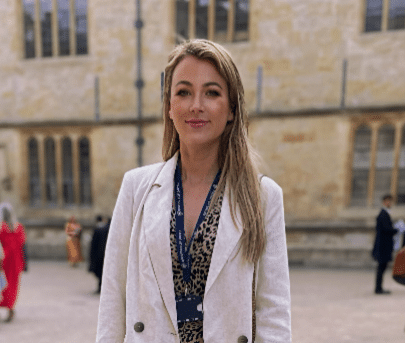
Historically, only two women have ever started a Grand Prix race, and as of the 2026 season, no women are competing in Formula One. This male dominancy is by no means restricted to the track, with social scientist Dr Kate Bancroft estimating that a mere 5% of technical motorsport roles (that is, the engineers and mechanics) are taken by women. We hear from Kate about her research into the F1 gender gap, which she hopes – alongside revealing some of the barriers and struggles faced by women – will start a wider conversation about the divide that exists in top-level motorsports.
This work was conducted in 2023 while Kate was a researcher at King’s College London.
**During the podcast, it was mentioned that there has not yet been a female team principal in Formula 1. We would like to clarify that Monisha Kaltenborn served as Team Principal for Sauber from 2012 to 2017 (the first woman to hold the role).**
[Music]
Emily Elias: There are twenty-four Formula One Grand Prix races scheduled for this season, and that will take fans, drivers and support crews around the world. F1 is huge and we’re going to focus in on the female engineers, mechanics and other women working in technical roles in the sport. So on this episode of the Oxford Sparks Big Questions podcast, we’re asking what’s it like for women working in F1?
Hello, I’m Emily Elias and this is the show where we seek out the brightest minds at the University of Oxford, and we ask them the big questions – and for this one, we’ve found a researcher who’s written a paper surveying women in F1.
Kate Bancroft: So my name is Kate Bancroft, and I am a research fellow here at the University of Oxford and I research health and I also work researching sport and physical education in my free time as well alongside that role.
Emily: And F1 is a passion of yours, I take it, because you’ve done some research about F1?
Kate: Yes I have.
Emily: So you’ve written a paper looking at essentially what women are experiencing who are working in engineering roles in F1 and some of the challenges they face in their workplaces, like stuff like what happens when they get their period or if they get pregnant or harassment they might face. So what can you tell me about the inspiration for this?
Kate: So the inspiration for it really was coming from the fact that I had done so much reading about Formula One, and I had not really seen the topic come up very much of women engineers that are working in the paddock and in the garages for the teams, or anyone really doing any work in engineering, mechanical or any kind of technical or manufacturing role. All you did seem to see and hear about was male engineers and male mechanics and the drivers. So I wanted to try and diversify some of the academic literature out there in the field. And there was very little done at the moment on sort of human resources and the human performance side of the staff that work behind the scenes in Formula One. So I wanted to bring to life their stories and bring them to the surface, which was the point of this article.
Emily: So when you’re looking at the world of F1, how many women are there working in this industry and what kind of roles are they finding themselves in?
Kate: So we don’t know how many people that are female are working in this particular role, because the teams keep those statistics very much to themselves. But it’s an extremely small amount. No team principals, no drivers at the moment, very few women on the pit wall in comparison to men. So there’s a really big underrepresentation of women in highly visible or technical roles, and Lewis Hamilton recently commissioned a report, it was actually in 2021 which found out that only one percent of employees in Formula One were from black backgrounds. So the diversity problems are not just about gender, but also racial diversity as well. And the women in this paper that were doing these roles was anything particularly technical to do with improving the car performance. So it might be that they were a data engineer or a race engineer, a car performance engineer, mechanic, health and safety, anything in the factory that was to do with the technical nature of the sport and the role, and not to do with marketing, finance, HR or anything like that. So very much about the role that’s focused around making the car as high performing as possible.
Emily: And how many women are we talking about in engineering roles? Are we talking like dozens or hundreds, or how many? Do you have a rough estimate of how many women are doing these types of jobs?
Kate: So in existing roles for engineering or mechanic or technical roles, I would have to guess, make an informed guess, that it would be about five percent of the total workforce of those roles are women.
Emily: But because you were looking at such a small group of women, I’m sure you were able to get really detailed information about what their work lives were like.
Kate: Absolutely, and that’s what I’m really, really interested in, the detail of women’s lived realities. So when we’re talking about things that are to do with pregnancy, menstruating, how those things affect work and systematically fitting in and integrating in the differences, they are not things that you can just quickly brush off in a very short survey or anything like that. So we wanted lots and lots of detail, especially when we’re looking at how a really complex system works, to find out for the very first time in writing what are the realities of the women that are working within this particular sector. What are the things, what are the norms that they’re up against? How do they feel misclassified within that population group? And how is their environment and the architecture in which they’re working within the factory, how does that sort of preserve the status quo that it is easier to work here if you are a man?
So it wasn’t about trying to get yes or no survey style answers, it was about to get lots of rich data about these women’s lives as a starting point.
Emily: And what did they tell you?
Kate: Lots of different things, and they told me lots of brilliant, happy things about why they chose to work in that particular sport and why it’s such a satisfying career path to choose. But they also told me a lot of stories about feeling left out, and the paper talks about them being anomalies in a workforce that was created originally for men.
So what I worked out from all their different answers is there is what I called a different cycle of exclusion, where basically there’s a process that seemed to come about for women working in Formula One. So this is just the technical position, so this isn’t advertising and it’s not marketing. And the process seems to come from this kind of entrenched culture of sport that’s come about as a result of it being historically only men really working in these roles. So as a result, the stories are basically coded a four-stage process that it seems that they go through.
Emily: What are they going through?
Kate: Stage one is this foundation of inequality. So women are having to be brought into these workforces or choosing to work in these workforces where historically women have actually had to take on very gender stereotyping kind of roles in the past, like grid girls and be very involved with handing over the trophies and stuff. So it was a result when women came in as engineers or mechanics, they were viewed all of a sudden, in my interpretation of the data from the stories that they shared with me, as anomalies on what’s called a theory by Mary Douglas, so we put a theoretical lens on this article, which is matter out of place. Now matter out of place, for example, a Coke can in TGI Fridays or in a pub. You and me going for a drink on a Friday afternoon is matter in place, it’s a Coke can belonging where it should be being enjoyed in an ice-cold setting.
Emily: Yeah, I get the context. We’re having a drink, of course there’s a drink there. But what you’re talking about is like when you see a can of Coke on top of a mountain or in a museum exhibition, as opposed to somewhere you would naturally think to see it.
Kate: Exactly. So these women are not wrong in themselves, but they’re wrong when they’re not in the context that other people in that environment perceive that they should be. They’re not there in skimpy bikinis draped all over the cars, they’re in the garage surrounded by men, they’re underneath the cars doing work. So it’s that they don’t fit in within that very established male centric workplace structure, and therefore they’re kind of a threat to the ecosystem, almost perceived as impure if we look at it through that theoretical lens, to an existing social order. So the first stage is basically they’re trying to fit in in a culture that has not been built for them, and they are an anomaly in that context, not bad in themselves but bad within those particular roles.
Emily: And then what are the other sort of stages that you found these women are going through?
Kate: So then the problem is there’s an onset, according to the themes that came out of this article, that there is some kind of systemic sexism going on, which then creates a hostile environment. So for example, a lot of the women described being overtly discriminated against, harassed when they are experiencing things like being the brunt of a joke and then laughed at. Then it just reinforces this kind of male centred culture that restricts their opportunities because they’re made to feel like they don’t particularly belong here, devalue their voices, and as a result, because historically it’s been so male dominated, a lot of the friendship groups are all men. And when the women try and join, they feel like they don’t quite fit in, so they don’t go to things, and as a result they miss out on lots of informal opportunities like networking or mentoring. You know, with most workplaces there’s kind of unsaid secrets and tips that you don’t really learn unless you see people in a social setting.
Emily: And for like a larger context, these are women who are travelling around the world in these sort of groups, right? Like they’re going from city to city along with the crew, so your workplace almost becomes like a part of your life, it just bleeds into that whole sort of…
Kate: Absolutely. It’s very blurred boundaries of work and life in these settings because they’re travelling, they’re spending a lot of time in airports, they’re staying in hotels with hotel bars, it’s not like a nine to five office job. They’re also doing really long hours, so they’re seeing more of their colleagues than they are of their families and things like that. So there becomes this big gap, often a gap as well perceived by the diversity goals and then the reality of actually working in that particular setting. So they might go on their team social media and it looks like a super friendly female workforce, but actually because their environment, trying to fit in with something that’s been so male, is unadapted. And as a result, things like, so one of the teams for example, the women’s toilets were miles away because they were added on as a bolt on extra when the teams got women engineers for the first time. So they might go to the toilet and take longer than men because they have to walk further or go to a disabled toilet, and when they get back there might be jokes about how long they’ve been gone for. So they’re a daily reminder basically that the environment that they’re working in at the factories or at the track was not built for them, which kind of leads on to stage three.
Emily: Yeah, what’s stage three?
Kate: So they’re working in this hostile environment where they’re often made a joke of, sexually harassed. They might then decide to raise their voice and say something about it, which puts a burden on the women to try and stand up for themselves, and as a result of that they are then positioned as a problem when they speak up. So instead of the systematic flaws that might take part in the context of the factory or the paddock instead of those being addressed, the women themselves are often then positioned as the source of the problem or the disruption to the status quo. So they face this double disadvantage from being basically the face of women in their particular roles. So for example, if they’re doing a very technical job, it might be the first female to do that role and feel under a particular amount of pressure more than others. They’re particularly visible because they are female, but they feel like they have to do particularly well because if they fail then people will begin to think, oh they just got the job because they’re a woman or they’re a diversity hire or things like that. So they face this double disadvantage of being super exposed, but also doing the job in a very tough way for the first time because they’re the first person to do it, and they don’t have mentors that are female that are also dealing with things that come along with being women at the same time.
Emily: It sounds really difficult to be a woman working in F1 then, with all of these sort of factors that they’re working in.
Kate: Absolutely. One of the women said, it’s a direct quote, as a woman working in a male dominated field, there is so much pressure to be perfect all the time. I am constantly worried that if I mess up, I will ruin the reputation of all women in the business and make it harder for all the women that are working here. But there are also these women reported being spoken over, having their ideas ignored, being self-censored due to the fear, and then as a result the last stage of this process is basically to navigate this very challenging environment. They either have survival strategies which then feedback into and reinforce this existing cycle, or they burn out and they leave. So the survival strategies might be adapting, quoting one participant, they feel the need to man up, change their behaviour, change their language to avoid getting negative attention. Some will challenge exclusionary practices, for example pushing back when they feel like their ideas are repeated by male colleagues or they take the credit for them, or they just manage the immense pressure to be perfect and they just find a way of getting around that and trying not to berate themselves if they do anything wrong. And then for others who feel like the strategies are too much, they burn out, they leave, they’re forced to either adapt to a flawed system which perpetuates the cycle, or they just leave, and then nothing changes and this problem of underrepresentation of women in these roles is perpetuated.
Emily: Is there high turnover for women in F1?
Kate: There’s no stats at the minute. This is the first paper that ever really looked at this, and the sample size is quite small, so sixteen, but it’s very in depth about their lives. And it’s not meant to represent all the women that work in it, but it’s just meant to be like a foundational paper to get the conversation going. So there isn’t, no team because they’re private businesses share what the attrition rate is, but informally from what you hear, very much so, especially when it comes to things like wanting to start a family. A lot of them wait till very late on in their lives to do that and things, and then leave or go to a factory-based role, which again perpetuates and interlocks this cycle and means that these sexist structures continue to not be broken down.
Emily: So the intent of the paper is, I guess, to start a conversation about what is happening in the industry. So is this just like an F1 problem or is this widespread do you think?
Kate: I think this is pretty widespread because Formula One has become so popular in recent years on the back of Drive to Survive during lockdown and everyone watched it. This is a problem that when we compare it to existing publications looking at very similar things in other sports, the findings very much parallel them. And some of these studies have not even come across when I did the data collection, analysed it and then found
them after, and it’s just crazy how similar they are.
So there was some research by two authors called Hyman and Walker in 2020, five years ago, and they found out very, very similar findings to this, a pervasive sexism, hostile cultures, the impacts on career, which I think is the most important, is those kind of emotional consequences for women when they are made to feel like they’re a problem when all they’ve tried to do is do well at work, which makes them want to leave the industry. And then in American Hockey League too they found out again that women adopt strategies very similar to this to reframe their experiences, to try and overcome like personal strength, and if they drop out they feel like there’s going to be even less role models for women that come after them, so they continue in the industry. And especially the lack of reporting that came up as a really big theme in my study, which was that there’s such mistrust within HR, especially when the head of HR is on the senior management and very close to the CEO or the team principal, that people just don’t feel like that’s a safe space to come to. Or when they have done, they feel like there’s a massive delay in investigating things.
So yeah, there’s very similar findings in other sports. And what was great was to place this study within that pool of research articles for the very first time and draw some conclusions that are similar to these existing studies, and also look at where they are different too.
Emily: What do you hope will come out of this?
Kate: Well my dream when I was writing this paper was that, like I just said, it would get the conversation started. At least we’ve got something to work with, so instead of it just being theoretical and discussed in an abstract way, we’ve actually now got some hard empirical data to back up some of these claims. And my hope is that I will go to each team and share the findings and say, you have to be very careful obviously how you present this because you don’t want to out, if they’ve only got one or two female mechanics or engineers you don’t want to say this came from your engineers or anything like that, but this came from people from across all the different teams. And we can basically show how so many of them are suppressing their concern, how that can hinder their performance, and so instead of just basically highlighting insights I’m hoping that it can begin practical steps to try and make sure that this cycle that so many women find themselves in can be stopped or changed or improved.
[music]
Emily: This podcast was brought to you by Oxford Sparks from the University
of Oxford, with music by John Lyons and a special thanks to Kate Bancroft.
Tell us anything about this podcast, we’re on the internet at Oxford Sparks or go to our website, oxfordsparks.ox.ac.uk.
I’m Emily Elias, bye for now.
[music]