Could vaccinations stop people from getting cancer?
Wednesday 12th Nov 2025, 12.30pm
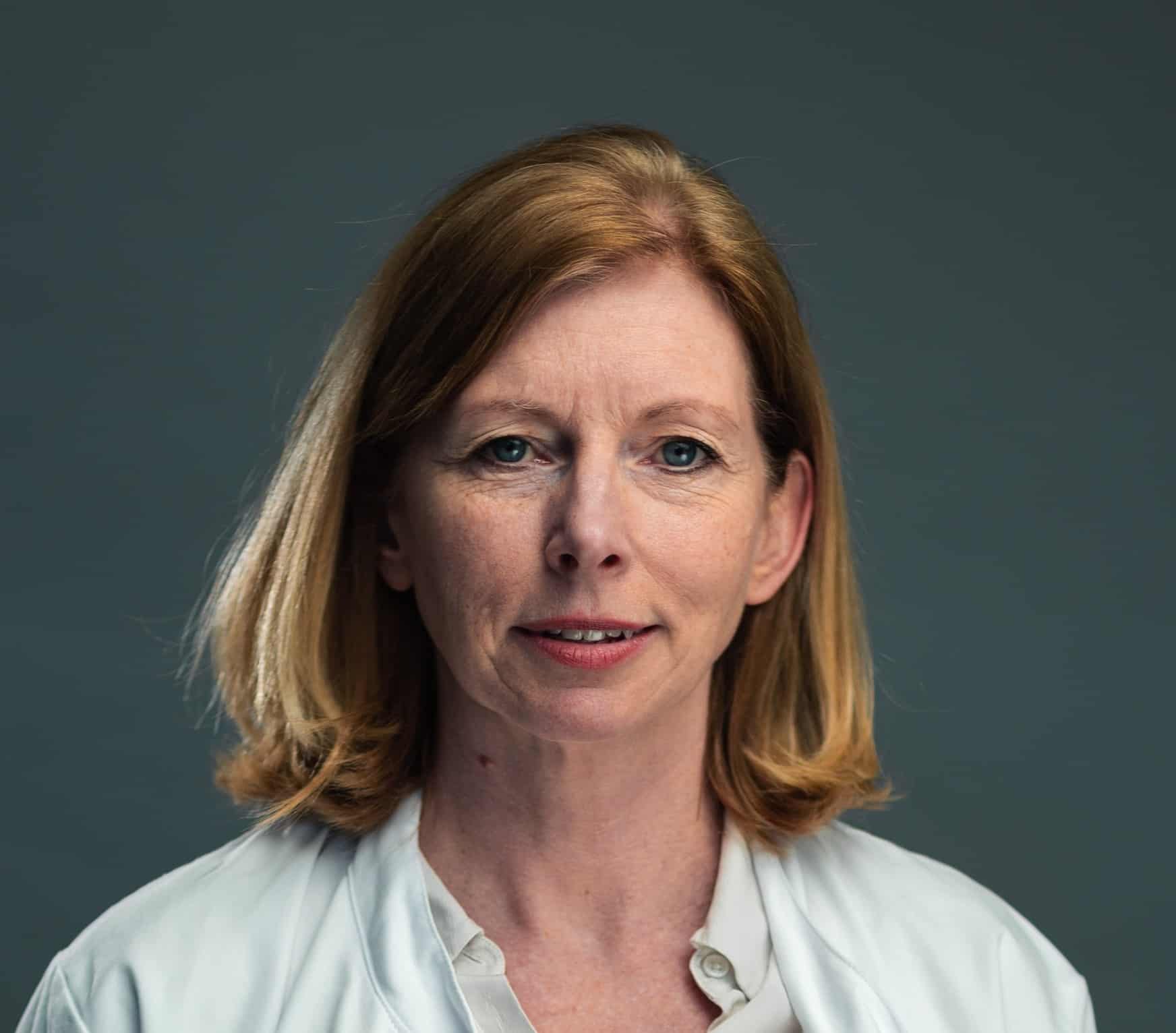
Finding a cure for cancer is unarguably one of the biggest medical challenges that we face. But what if we could find a way to prevent cancer before it even starts? In this special extended edition of the Big Questions Podcast, we chat to Professor Sarah Blagden, an experimental oncologist at the University of Oxford, and Anna Fry, who has the cancer predisposing condition Lynch Syndrome – putting her at increased risk of developing colorectal and other cancers. Sarah explains how clinical trials of vaccines targeting ‘pre-cancer’ could revolutionise the fight against cancer, beginning with those at greatest risk.
[Music]
Emily Elias: There are four hundred thousand new cancer cases in the UK each year, and that number can sound really scary. But thankfully, researchers at the University of Oxford want to bring that number down dramatically. And they’ve got a plan.
On this episode of the Oxford Sparks Big Questions podcast, we’re asking can vaccinations stop people from getting cancer?
Emily: Hello, I’m Emily Elias, and this is the show where we seek out the brightest minds at the University of Oxford. And we ask them the big questions. And for this one, we found a researcher who specialises in experimental oncology and a patient who would directly benefit from a new treatment.
Sarah Blagden: My name is Sarah Blagden, and I’m professor of cancer research at the University of Oxford. and for the last twenty plus years I have been really interested in running clinical trials.
To start with, I was running trials looking at treatments for cancer, but more recently I’ve moved to thinking about trials to prevent cancer. And I’ve been working on redesigning how you run those studies. And I’m also a scientist, so I’ve got a real interest in RNA biology, and I’m quite interested in combining the two areas and starting to design drugs that basically prevent cancer and running clinical trials off the back of that.
Emily: Anna is sitting next to you. Anna Fry, who are you?
Anna Fry: I’m a patient. So hoping to benefit from Sarah’s research and Sarah’s colleagues research. So I have Lynch syndrome, which is a condition that puts you at high risk of certain cancer types.
Emily: So what exactly does Lynch syndrome mean?
Anna: You’re more likely to get cancer. So you could be diagnosed with Lynch either from having had a cancer diagnosis and then realising that you’ve got Lynch because it affects the treatments that you’re eligible for. Or you can be diagnosed just with Lynch and no cancer via maybe a family member getting diagnosed with a cancer or someone else in the family knowing they’ve got Lynch. So it’s an interesting one. And I’m on the side of being a patient with Lynch, but not cancer, if that makes sense.
Emily: Can you just spell out for me what sort of types of cancers you would be susceptible to?
Anna: So the types of cancer that people with Lynch syndrome are at increased risk of? There are particular types. It’s not every single type. And obviously certain cancers are more common than others. So people with Lynch syndrome will get them even more. But bowel cancers are colorectal cancer and endometrial cancer. So womb cancer. My mom had ovarian cancer. Um, so another gynaecological one. Also certain relatives have had pancreatic cancer, certain brain tumours, certain types of skin cancer. It’s a long list. Lots of cancer types, but not every single cancer type.
Emily: You say like two or three of those. And that’s life changing to be worried about, like a laundry list of cancers, that’s got to be really intense.
Anna: Yeah. I mean, I guess every single person out there is at risk to different degrees. So in a way it’s carrying something everyone else does as well. But to a higher degree, it’s kind of always at the back of my mind in a way. You’re at an increased risk of various cancer types. So you should kind of be more aware of signs and symptoms of cancer and what to do if they occur. But also you can partake in screening activities. So to try and prevent the cancer developing. And you can also take part in early diagnosis activities. So it’s a kind of mixture of things to try and prevent the cancers occurring and also try and catch the cancer early if you do develop a cancer.
Emily: Sarah, can you explain to me how you came into Anna’s life?
Sarah: Over the last few years, we have been thinking very carefully about how we can prevent cancer in various different high risk groups. So there are people like, for example, Anna in the Lynch community, but there are also people who carry BRCA mutations. And there’s another syndrome called Li-Fraumeni Syndrome [LFS]. And all of them have quite a high cancer risk. But yet there’s really very little research into how to prevent cancers in that group. And so we decided to really focus our research on that area, trying to understand the biology of how cancers start in those groups and why, and then try and design targeted interventions, ways of preventing cancer from happening in those
patient groups.
It gives us a way of proving the benefit of a treatment by going into a high-risk group but it also benefits those who need it the most, first.
Emily: What kind of treatments are you looking into?
Sarah: So we’re looking at either targeted drugs or vaccines that can be used to prevent cancer.
Emily: Do you have a cancer vaccine for Lynch syndrome?
Sarah: So the group in Oxford. So it’s not just me. There’s quite a large group in Oxford now that have been designing and developing LynchVax, which is a vaccine that’s designed to prevent colorectal and endometrial cancer in patients specifically for patients with Lynch syndrome.
Emily: And so what would that do?
Sarah: Well, we need to see if it works. But the design of the vaccine is to target those very, very early changes that happen with Lynch syndrome. So if you look in the gut of someone with Lynch syndrome who is starting to develop a cancer, you can detect these tiny lesions called aberrant crypt foci. And what we’ve been doing is trying to identify what genetic mutations happen at the earliest stages of Lynch. And this is my colleague, Professor David Church in Oxford, who’s been really working hard on this.
And then having sort of identified these lesions, can we then teach the immune system to better recognise and eradicate them once they start to appear? And that’s the philosophy behind LynchVax.
Emily: And so this is a vaccine that would be open to people with Lynch syndrome. Is it even wider than that, or could it? Is it just specifically for Lynch syndrome?
Sarah: Well, we have other vaccines as well. So we’ve also developed a LungVax, which is going to be starting trials at around the same time as LynchVax next year. And that one is a vaccine designed to try and target the earliest changes that happen when people develop lung cancer. So that’s for people at high risk. And Lynch obviously is more specific to Lynch associated cancers. We’re also developing another vaccine to protect BRCA carriers against breast and ovarian cancer, which is their commonest cancers. But ultimately, what we’d love to do is merge all of these vaccines into one vaccine that we could give to protect every adult from getting cancer in the future,
Emily: Like a super vaccine, one vaccine to rule them all.
Sarah: Yeah, like I’ve called it AllVax, but I think there’s probably a better word to describe it. But yeah, some sort of cancer prevention vaccine that we could then you could potentially then look at sort of it’s an old fashioned word, but inoculate people to protect them from cancer.
Emily: And what do you think about that?
Anna: I think today is the first time I’ve heard about AllVax. Um, it’s kind of mind blowing, really. I tend to think about specific groups of people that are being of being at particular high risk, and you just target them with one thing, and it works with just that group. But the idea of it being of benefit to everyone, not just a tiny group of people or a small group of people or a large group of people, it’s great.
Sarah: So one of the things that we now know about cancer is that it actually takes a long time to develop in our bodies. And in fact, we’ve known about this for about a hundred years. And there is something called pre-cancer, which is just like pre-diabetes. It’s the prequel to cancer. And in many cases, pre-cancer can exist in our bodies for decades before we actually get the cancer. And so, increasingly, we’re starting to recognise this is a window for intervention. This is an opportunity for us to get in there and actually prevent cancers from even starting in the first place.
Emily: And so when you’re talking about pre-cancer, you’re talking about the type of before the, the cancer cells even sort of like mutate and start kind of multiplying and doing all the horrible cancer stuff they do. The element of that sort of cancerous cell sort of lurking around in, like you say, your bowel or something like that.
Sarah: Yeah. I mean, it’s interesting. They the cells, if you look at them under the microscope with Pre-cancers, they’re very, very tiny. I mean, you know, pre-cancers are very tiny. They’re usually sort of a few millimetres, sometimes very small in size. But under the microscope, the cells look like cancer cells. And they have mutations and they’re sort of proliferating, but they are contained. They’re contained by what we call the basement membrane. So they’re actually contained within a structure they haven’t started invading into the body. And it’s quite likely that they’re being held there by the immune system. And our immune system is constantly doing that, sort of corralling these abnormal cells and destroying them and preventing them from getting out. If you imagine a kind of sheep in a pen, it’s kind of putting them in a pen and keeping them under control and eventually eradicating them. But what can happen is you can get a rogue sheep breaking through the wall of the pen, and that’s when cancer starts.
Emily: And so how would a cancer vaccine work with the pre-cancer sort of element of it? Would that almost make the pen stronger?
Sarah: Yes. So what it would do would be to teach the immune system to actually be better at eradicating the sheep once they were in the pen, or eradicating pre-cancers.
There’s a guy that discovered it, you know, like about a hundred years ago.
Emily: Really?
Sarah: Yeah. He was an amazing guy, Albert Broadus. He was based at the Mayo Institute, and he kind of discovered and first described carcinoma in situ, but it kind of got swamped by other biology. Other science came out after that. Well, World War Two happened. A lot of the pathologists kind of didn’t run with it. And so it kind of fell out of fashion, fell out of interest. Only the Gynae group really grabbed it. And that was where all the cervical screening came out of, you know, the skin changes in your cervix. That was all based on that early discovery. And they were like, oh yeah, look, I can see these lesions. And they’re not. They’re not actually turning into cervical cancer if we take them out. And so that kind of kicked off the what’s now cervical screening. HPV vaccine. So if we could only do the same with other pre-cancers and pick up where they left off, that would be amazing. So it’s a bit of a renaissance movement at the moment.
Emily: I mean, you’re obviously living with Lynch syndrome, so you have a different sort of way of approaching this sort of world of living with pre-cancer. The idea that you could have a vaccine. How would that change your outlook on life?
Anna: Um, it probably wouldn’t change what I do day-to-day, so it wouldn’t make me kind of more reckless. Or stop taking the aspirin that is already proven to lower your risk. So probably wouldn’t change my behaviour day-to-day, but it would make you more hopeful, more positive. Maybe push it further to the back of your mind, if that makes sense. Kind of a reduced risk would make me feel more hopeful and less worried, I guess, even if it’s not kind of stressing me out day-to-day, if that makes sense.
Emily: Yeah, like that little sort of like a little bit of anxiety is just sort of lifted that you don’t even realise. Is there all the time?
Anna: Yeah, I think so. And also like for future generations, I think with hereditary conditions there’s a lot of guilt. I don’t have children myself, but say my mum who that’s where the Lynch syndrome is from. In my family it’s that side, so she feels a lot of guilt that she kind of given something to me that puts me at higher risk. Whereas if the risk were lower, that kind of whole complex emotional side of things is maybe lessened.
Emily: So, Sarah, where are we at with this? Because clinical trials can mean a lot of things. What’s the timeline like of like actually seeing something like allVAX being put into people’s arms.
Sarah: Yeah. So that would take allVAX, this idea of merging all the vaccines, will take at least a decade. So that’s not going to happen immediately. But meanwhile what we’d like to start doing is running studies looking at the safety and efficacy of these individual vaccines in specific, high-risk indications over the next ten years, and we want to roll them out as quickly as possible, because we want to make sure that we learn quickly and adapt the vaccines as we go.
So next year we’re opening LynchVax and LungVax, and then we’re hoping in the years following that to open more vaccine studies in different high-risk indications, like, for example, the BRCA VAX vaccine.
Emily: And so the process of actually getting to a point where you’re at a clinical trial. How difficult was it to get to this point? Because I can’t imagine it was easy.
Sarah: I think we were very lucky in Oxford. We had a really nice convergence of ideas and experts when we started to come up with this concept of developing cancer preventive vaccines.
And so we’ve actually been able to move things through quite fast. For example, the lungVAX vaccine has probably taken us about three years to get to where we are now. We’ve already manufactured it. It’s already in vials. It’s already ready to go. We have to design the clinical trial, and that has to go through various regulatory steps to make sure that we’re not risking people in any way. And once it gets past that stage, we’re hoping to open it about June next year and sort of be ready to go at that point. It’s a safety study, so we’ll be looking at how safe it is and then starting to as we gain more confidence, starting to expand the trial into a larger prevention trial.
Emily: And this vaccine, is it like something like a shot like a we are familiar with or is it something different? Am I, is my imagination failing me?
Sarah: No, that’s absolutely right. So the vaccine that we are using for the very first long back study is based on the ChAdOx vaccine, which was the AstraZeneca Covid vaccine, the backbone that was used during the pandemic, the Oxford vaccine. So we’re using a similar backbone. So it’s going to be administered as a couple of shots, probably two or perhaps three, maybe even four. We’re not completely sure at the moment. It depends how good it is at stimulating an immune reaction. So we’re going to be testing that as we go, but it’s going to be at least one shot with possibly two boosters.
Emily: That’s crazy. As far as, like, cancer research goes, how revolutionary could this be?
Sarah: Um, I think one of the things that we’ve seen that has revolutionised our thinking is the HPV vaccine. So that has been rolled out now it’s a vaccine designed to prevent a virus that causes cancer. So slightly different to us because we’re actually we’re designing vaccines to actually target those early cancer changes themselves rather than a causative agent. But that vaccine has reduced cervical cancer in those that get it by about ninety percent. So if you think that we could do a similar thing with vaccines across the board, it is really game changing. Can you imagine ninety percent less cancer?
Emily: Isn’t the statistic… One in two will get cancer in their lifetime. So if that’s reduced, that’s a huge statistical gain in the fight against cancer, right?
Anna: Yeah I would. It’d be revolutionary. I mean, it would affect the health system in every single way. I mean, it would affect people, there are so many people get cancer, I think four hundred thousand people. And it’s expected to rise and rise and rise. So it’d be revolutionary for sure.
Emily: And would you sign up for a vaccine? Would that be something that you’d be interested in participating in?
Anna: Yeah, try and stop me, for sure. I was actually in the first year of school, kids able to benefit from the HPV vaccine. I was in the catch up year, not the intended year, but I was able to benefit from that very early on. So fingers crossed. Yeah, I’ll be, I’ll be there.
Sarah: I think it’s really important that people who receive the HPV vaccine don’t have this fear of having a cancer vaccine. It doesn’t seem out of the ordinary. And I think that’s one of the great things that the HPV vaccine has done, is open doors to thinking about cancer prevention in this way.
Emily: On paper, this all sounds really amazing, but like, how do we know if it works? What are we looking for as a success story when you’re going through the clinical trial phase?
Sarah: Yeah, that’s the million-dollar question. And so what we’re going to be doing is, first of all, looking obviously at whether the vaccines are safe, but also whether they stimulate the right kind of immune reaction. We want what the T cells to be activated and able to recognise and prevent cancer.
So we’ll only really know how successful these vaccines are once we’ve conducted studies where we compare cancer incidence in people who’ve been vaccinated versus those who haven’t. So it’ll be a few more years before we’ll really know how successful these vaccines will be.
[Music]
Emily: This podcast was brought to you by Oxford Sparks from the University of Oxford, with music by John Lyons, and a special thanks to Anna Fry and Professor Sarah Blagden.
We are on the internet at Oxford Sparks, or you can go to our website, Oxford Sparks.ox.ac.uk.
I’m Emily Elias. Bye for now.
[Music]