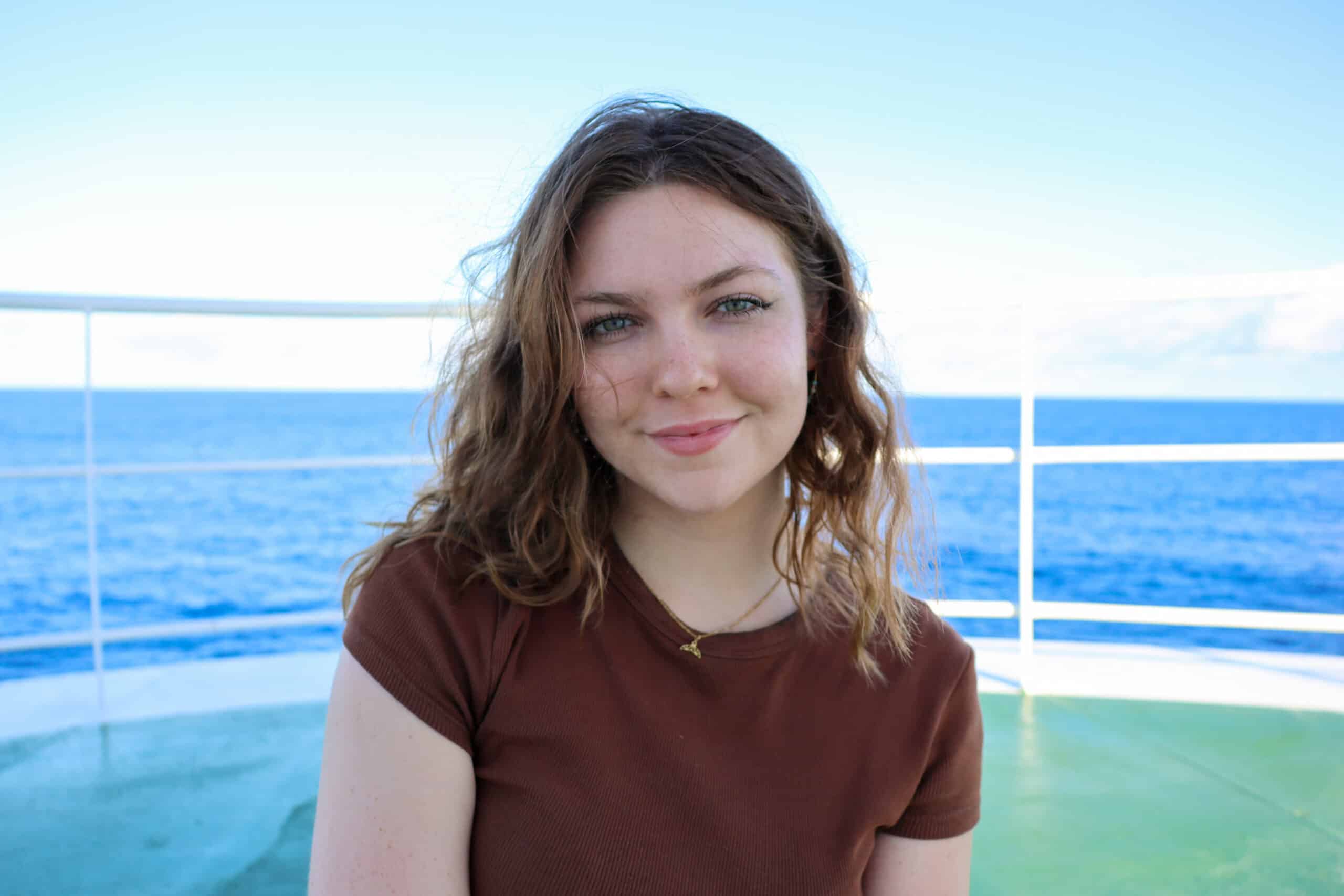
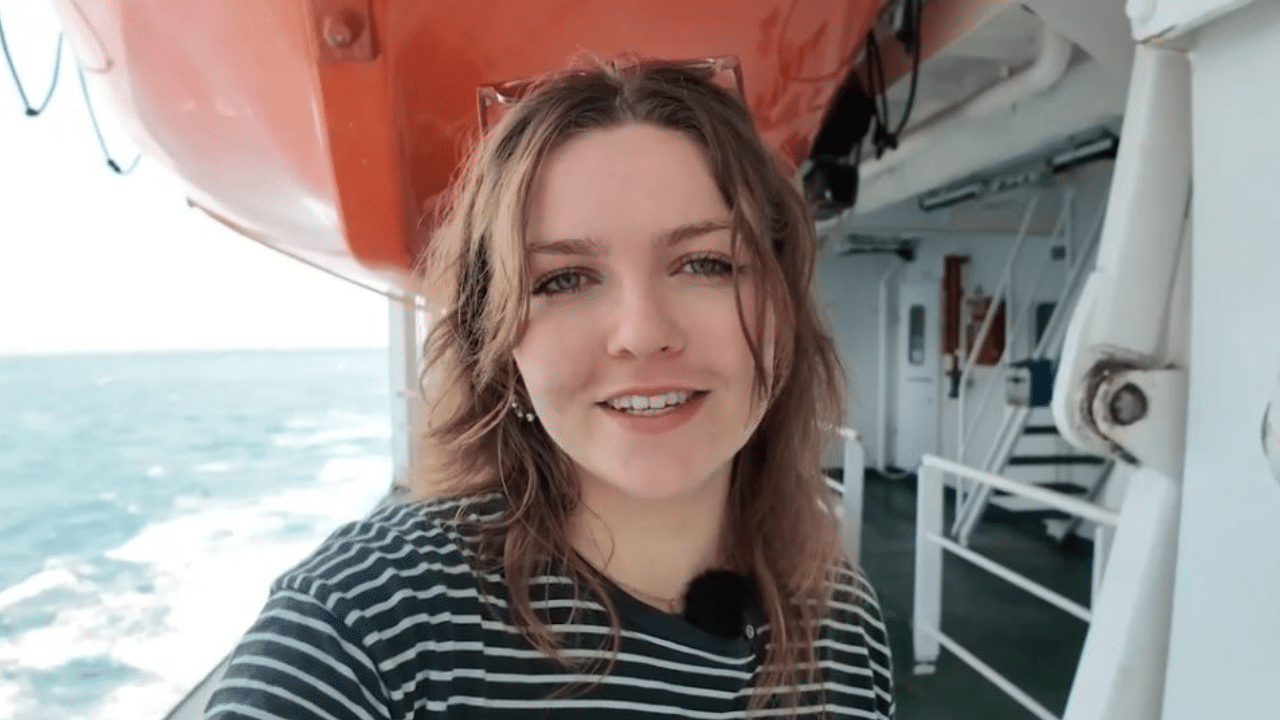
Arianwen Herbert
Ocean Scientist
“How inappropriate to call this planet Earth, when it is clearly Ocean?”, a quote attributed to Arthur C. Clarke, perfectly encapsulates my journey into ocean and climate science. Graduating with a master’s degree in Biochemistry from the most landlocked university in the UK, the University of Warwick, I was equipped with the skills and understanding of the micro-scale processes happening on this planet Earth, and infinite options of where to apply that knowledge. It made sense, then, to turn to the biggest and most important ecosystem on Earth, being, of course, Ocean.
Our ocean is our silent protector, producing the oxygen for every second breath we breathe, despite containing just 1% of photosynthetic (oxygen-producing) biomass on the planet, with the other 99% being terrestrial organisms. It also absorbs over 90% of the excess heat trapped in the earth system, and somewhere between a quarter and a third of anthropogenic, meaning human-made, carbon dioxide emissions. But the ocean cannot keep up with us indefinitely, buffering the burden humans are placing on this planet. And this is where I decided to focus my doctoral research: on how our oceans, and the life within them, is changing with the changing climate, and what this might mean for the future of life both in and out of the water.
To this end I study phytoplankton, the tiniest life forms in our ocean, which are responsible for removing carbon dioxide from the atmosphere and producing the oxygen we breathe. I look at who is there, what they’re doing, and how that is influenced by changing environmental conditions. I’ve been so fortunate to have spent over 100 days at sea (so far!), being as totally immersed in my field as one can be. Imagine seeing nothing but ocean in every direction for 50 days at a time! In my research I use a range of approaches, from big-picture techniques like satellite observations to the smallest scale cellular and molecular tools like DNA and RNA sequencing, to begin to untangle some of the processes and interactions happening in our oceans, and how they impact our climate system.
I am also a passionate science communicator, through my Instagram account @scienceformymum, and as a video reporter and producer for New Scientist. I maintain that ‘science’ is just the word we use to describe the way we humans observe, understand, and ask questions about the world we live in, and is something that should be accessible to us all as inhabitants of that world.
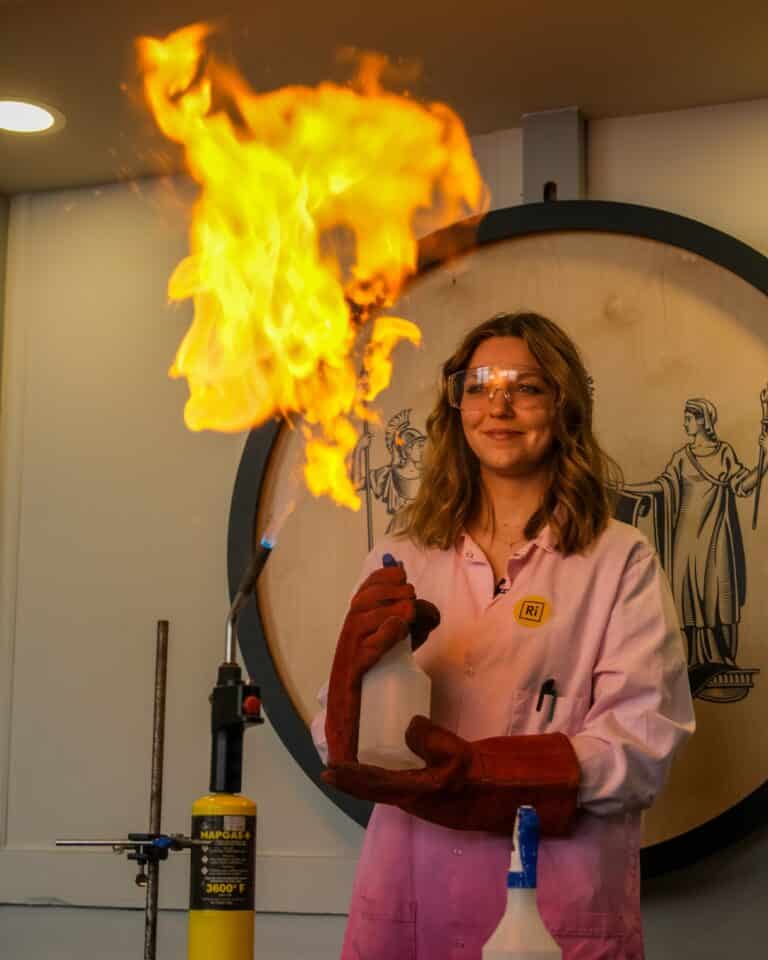
At the Royal Institution, London.