Where do baby penguins come from?
Wednesday 11th Feb 2026, 12.30pm
For this year’s Valentine’s Day episode, we are getting up close and personal with those most beloved of birds – penguins. Giving us an insight into the love lives of our feathered friends are penguinologists (yes, that’s a real word) Dr Ignacio Juarez Martinez and Dr Fiona Suttle, who have both graduated from Oxford’s Department of Biology, and spent multiple field seasons in Antarctica monitoring penguin breeding behaviour. We hear how penguin breeding patterns appear to be shifting with changing temperatures, and how you can get involved in their research – just head to Penguin Watch to take part.
[Music]
Emily Elias: A successful penguin courtship will lead to adorable babies. But with climate change, researchers are keeping a keen eye on when these breeding behaviours are actually happening.
On this episode of the Oxford Sparks Big Questions podcast, we’re asking where do baby penguins come from?
[Music]
Hello, I’m Emily Elias, and this is the show where we seek out the brightest minds at the University of Oxford, and we ask them the big questions. And for this one, we have found not one, but two researchers who are ready to dish about the secret love lives of our penguin friends.
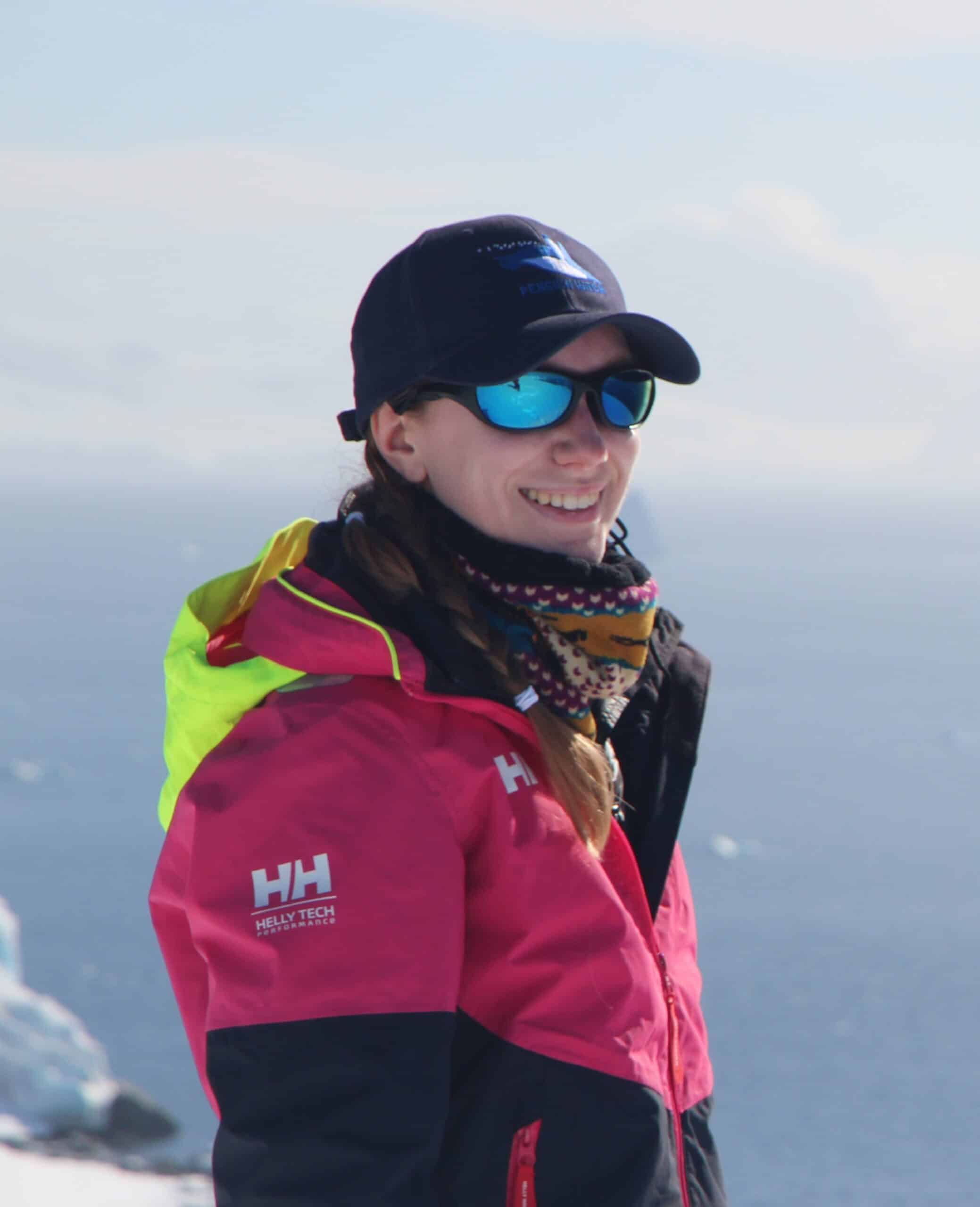
Dr Fiona Suttle: My name is Dr Fiona Suttle and I wear two hats. I’m both a penguinologist, that is a real thing, and a science communicator. And as a science communicator, it is my pleasure to look after Oxford Sparks as my day job. And of course, Oxford Sparks is the home of the Big Questions podcast, so it’s very exciting to be here on the other side today.
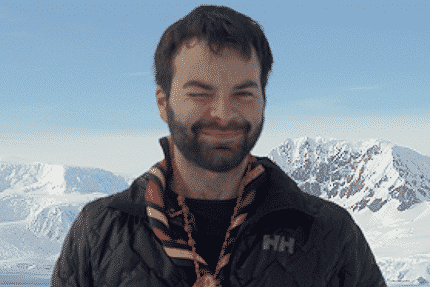
Dr Ignacio Martinez: Hello, my name is Nacho, or more formally, Dr Ignacio Martinez. I am a former colleague of Fiona in the Penguin Lab. We both graduated in penguinology, and I’ve come here to the podcast to talk to you a little bit about penguins.
Emily: Okay, perfect. So we’re going to talk about penguin breeding. But before we get into the whole cycle of how they breed, let’s just talk about where do babies come from. Um, how do we make a penguin baby?
Fiona: Well, I think something important to say first, actually, is that there are eighteen different species of penguin. Even though all penguin species live in the Southern Hemisphere, they’re distributed all the way up to the equator.
So if you think of all of the different environments that these animals are living in, then it becomes clear that they are adapted to a lot of different regions. And you won’t just have anatomical and physical adaptations, but behavioural ones as well. So these different species breed in different ways when we’re thinking about things like their courtship rituals and where they nest, how many eggs they lay, how many times they breed per year. So there’s an awful lot of things to think about. But I think actually talking about the physical nuts and bolts of it is a really good place to start because that is actually relatively conserved across species.
Emily: So what happens? A mummy penguin and a daddy penguin love each other very much…
Fiona: When they get to that stage. The first thing to understand is that the male penguins do not have a penis. So this might be surprising to you or not, depending on how much you’ve thought about this kind of thing before. But penguins have a cloaca. So this is something the males and females have, which is a single orifice. So they do all their business here. All their excretion, urination, reproduction, it’s all through this one hole. So I hope this doesn’t gross you out too much.
Emily: I’m into this. Okay. So we’ve got this one multidisciplinary, multifunctional hole.
Fiona: Multifunctional, yes, I like it. So the male penguin will approach the female. Once they’ve worked out who’s going to mate with who, the female will lie down and the male will mount her.
I think if I was to describe penguin mating in a couple of words, it would be quick and awkward. You might not be able to see Nacho’s face, but he’s nodding in agreement.
It’s not kind of the most elegant thing to observe. But the female will be there, the male will be on her back, move his way down to her tail end. She’ll then move her tail out the way, and the cloaca will touch in something which, this is going to be our Valentine’s episode, romantically is known as the cloacal kiss. So this is how it happens. And so there’s no penetration. They touch for a few seconds, and that leads to transfer of the sperm into the female’s cloaca. And, shortly, afterwards we have a baby penguin. That’s kind of how it happens.
Emily: Has it always had a cloaca, or did it, like, did these birds once have a penis? And then the penis went away? And now that leaves them to do their little rub together kiss.
Fiona: This is an excellent question and something that’s really interesting in my opinion.
So evolutionarily speaking, the ancestor of birds did have a penis and it’s something that they’ve lost.
Now, to me as a biologist, this seems very interesting because the penis is an excellent adaptation. It allows very efficient transfer of sperm in animals that are mating on land. It’s important to remember that penguins are marine predators, but they do mate on land. So. like a lot of birds, they’re on their nest. Why would they have evolved to lose something that, on the face of it, would seem to be very, very useful?
Um, well, there are a number of theories behind this. Some people think it could lead to quicker mating. I did just talk about how it was a fast process. If you’ve got predators about, you’re very vulnerable when you’re mating, so actually being able to mate very quickly might be an advantage there. It could lead to fewer infections spread sexually. Other people think, and I think there’s probably quite a lot of weight behind this, that it might be down to female choice as well. Females get more control over who is fathering their offspring if they’re mating in this way.
So there are a number of reasons. Um, it’s interesting that they have all the potential there to grow it, and yet they choose to suppress growing this organ. So clearly there is some kind of evolutionary advantage.
Emily: Okay, so Nacho, we’ve learned how baby penguins are made. You’ve spent a lot of time watching penguins do it. Um, what are their breeding patterns telling us?
Nacho: So the thing that we have been seeing over this decade and a bit of monitoring is something that actually will not sound very important at first, but actually you’ll see how it is, and is that they’ve been moving the time at which they breed also very fast. Uh, a day and a half or even up to two days per year. That makes up to fifteen, twenty days per decade. That is a lot.
Why is the timing of breeding so important? Well, because it helps you with a lot of things. So you want to breed at a time where there are maximum resources to feed your chicks. You want to breed at the same time as everyone else so the predators that might be around don’t pick up on your chicks or your chicks have fewer chances of getting picked up by predators. It is very important because you want to breed as soon as possible, because otherwise the winter might come at the tail end of your breeding and cut it short and, you know, literally kill your chicks. So the timing of breeding is super, super important. And we have been seeing these massive movements, these super fast movements, um, towards earlier breeding faster than any other vertebrate in the world. And we are quite worried about that.
Emily: So you found out that the breeding pattern has shifted about fifteen days, like fifteen days. That does not sound a lot to me, you know, two weeks. Why does that really matter?
Nacho: Yeah. It’s not even a good holiday, fifteen days. Uh, but for penguins, it’s really, really important because it’s not – what we have found is that this is happening at a species level – not just one colony. It’s not a one off, it’s a species thing. And this is very worrying because of all of the possible consequences that it could have, but also because this is happening very clearly in relation to warming of these penguin colonies. Uh, the cameras that we deploy there have temperature loggers, and these temperature loggers are telling us that our colonies are warming up at an incredible speed, zero point three degrees per year. If you remember, the Paris Agreement said that we should not warm the planet beyond one point five degrees by the end of the century. Well, these colonies are busting that limit every five years, twice per decade. That is massive. Uh, of course, this is not representative of the continent as a whole, because penguins are choosing these places precisely because they are snow free and as warm and cosy as you can get in a barren continent of rock and ice. But, you know, like, this is still very, very worrying. And also, it’s not only temperature, but also this is being related, we’ve managed to relate this to sea ice productivity and other variables that are telling us that the environment is changing.
It is really, really worrying that we’re seeing these temperature increments and that this is driving an advancement of their timing of breeding towards earlier dates.
Emily: So what are the consequences of a penguin breeding fifteen days out of sync with the rest of the environment?
Nacho: So that’s the thing. We first need to understand whether they are out of sync or not. And one of the ways to understand if they are out of sync or not is by seeing whether they actually manage to produce more baby penguins. That is what we all want. So the next part of the study is going to be looking not just at when do they do things, but also at what is the result? Are they managing to bring up as many penguin chicks per year as they used to? Or has this been changing, and if it has been changing, in relation to what variables? So what are the variables that are being key to understanding the penguin productivity?
Emily: Well, how do you keep track of this then? If this is a big potential worry, who is keeping track of our baby penguins?
Nacho: So that’s for the next study. The next study that we’re going to do is we’re going to be looking at breeding success, uh, which is again, uh, how many chicks does each pair produce per season? And we’re going to be looking at how this has changed over the last fifteen years, so we can see whether penguins advancing has been an adaptive thing. This is like they’ve been moving together with their food resources and with the environment as a whole, or they have been, you know, left behind, or they have moved way too early to keep up with their little baby penguin production, which is what we all want.
Emily: So does that mean that you guys are off to Antarctica in the future, or are we going to keep track of these guys more close to home?
Fiona: So we are incredibly fortunate that we get to go down to Antarctica and conduct fieldwork, but we can’t be there all the time. We just can’t. It wouldn’t be logistically or financially possible. It wouldn’t be safe. So instead, we make cameras do the work for us.
So to take a step back, we have a scientific research project called Penguin Watch. Within that sits a citizen science project, which I will come back to in a minute. The project is based up the hill [Headington Hill] at Oxford Brookes, under the lead of Professor Tom Hart. And as I say, we have a network of remote time-lapse cameras. And what these do is act like a kind of CCTV, keeping an eye on the penguins when we can’t be there. So they take a photo once an hour throughout the entire year. And these can tell us really valuable information, like when an adult penguin is first turning up to breed, when the first eggs are laid, when the chicks hatch. And they also tell us some useful environmental data, like the precise temperature in that location, which is really valuable for us.
But we have kind of shot ourselves in the foot here, because we have seventy-seven timelapse cameras positioned all around the Antarctic Peninsula and surrounding Southern Ocean islands, taking a photo once per hour throughout the year. That leads to a lot, a lot, a lot of data. And we can’t possibly analyse all of it ourselves.
Emily: So you guys are just a couple of people, you’re going to need more eyeballs.
Fiona: We have amazing collaborators, but we’re just a tiny team. So what we do is we enlist the help of citizen scientists. So if you’re unfamiliar with the term citizen science, what it means is it’s when scientists like Nacho and myself enlist the help of the general public. So, um, people can sit at home in their cosy armchair, no need to get cold like Nacho and I going out on fieldwork, and they’re presented with one and then many of the images that we have captured, and they’re tasked with tagging the penguins in those images so that we can keep track of what they’re doing.
Emily: And so anyone who wants to get involved with this, they don’t need, like, some sort of fancy computer or anything to go ‘that is a penguin, that is not a penguin’.
Fiona: No, absolutely. And that’s what I really like about this. Um, as you can probably tell, I’m really passionate about engaging the public in research. And what is better than getting people to help with real science without needing any kind of training or any experience? So we encourage schoolchildren to do this. Anybody can get involved. And one of the nice things about it is you don’t need to worry about accidentally screwing up our data set, because we have measures put in place to control that. So we have multiple people looking at each image, and we can then take an average of their input so we can get reliable data.
Nacho: I think we now have nine million images in our data set, which is much more than either of us could have, you know, classified in a whole PhD, even if that was the only thing that we did. It’s absolutely, absolutely mad. That’s why citizen science is being so, so useful.
And I think the question that is standing for many people will be, oh, well, why don’t you put this through the AI? The other day, they drew me a photo of my nephew in a reindeer costume. Why can it do that? And well, the problem, we have many problems with AI, but the main one being that I would say penguin chicks are very dirty and, uh, they change size all the time. So getting a good training data set for dirty baby penguins is very, very, very difficult because you need enough instances of penguins dirty in every way possible at every different stage of the development possible for it to be reliable. And for now, for now, we haven’t managed that.
Emily: So will this data then be able to tell you what is happening with all the different populations all over Antarctica, just through images?
Nacho: The nice thing about this study is that we have seventy-seven timelapse cameras throughout Antarctica and the Southern Ocean. The nice thing is that we can draw conclusions about almost the whole species range, so we can draw conclusions for the whole species. Not like, oh, there’s this colony that is doing that. No, we know fairly, with a good level of confidence, that this is a species-wide behaviour, which is much more, well worrying, in our case, but much more interesting to understand what is happening at the species level. I feel that’s the super cool thing about this study.
Emily: I mean, we’ve come a long way from talking about penguin penises a few moments ago.
[Music]
Emily: This podcast was brought to you by Oxford Sparks from the University of Oxford, with music by John Lyons, and a special thanks to Dr Fiona Suttle and Dr Ignacio Juarez Martinez.
So Penguin Watch, it is out there. It is a citizen science project. We have links in the show notes of how to find it. But please go spot baby penguins for us. Tell us what you think about this podcast as well. We’re on the internet at Oxford Sparks or go to our website, oxfordsparks.ox.ac.uk.
I’m Emily Elias. Bye for now.
[Music]