What happens after a dementia diagnosis?
Wednesday 2nd Apr 2025, 12.30pm
One in two people will be affected by dementia in their lifetime – whether that is as a patient, or somebody caring for a loved one. But what happens after a dementia diagnosis? Is there a clear pathway ahead? We chat to Jasmine Blane, a DPhil researcher at the Oxford Brain Health Clinic, about the work she is doing to help support patients in the midst of a dementia diagnosis, and into the future.
Emily Elias: There’s a really scary statistic when it comes to dementia. One in two, so either you or me, will develop dementia, care for someone with dementia, or both. And getting told you or a loved one has this disease can raise a lot of questions about what that decline will look like and how fast will it be?
On this episode of the Oxford Sparks, Big Questions Podcast, we are asking what happens after a dementia diagnosis.
Emily: Hello, I’m Emily Elias, and this is the show where we seek out the brightest minds at the University of Oxford, and we ask them the big questions. And for this one, we have found a researcher who is ready to track some changes.
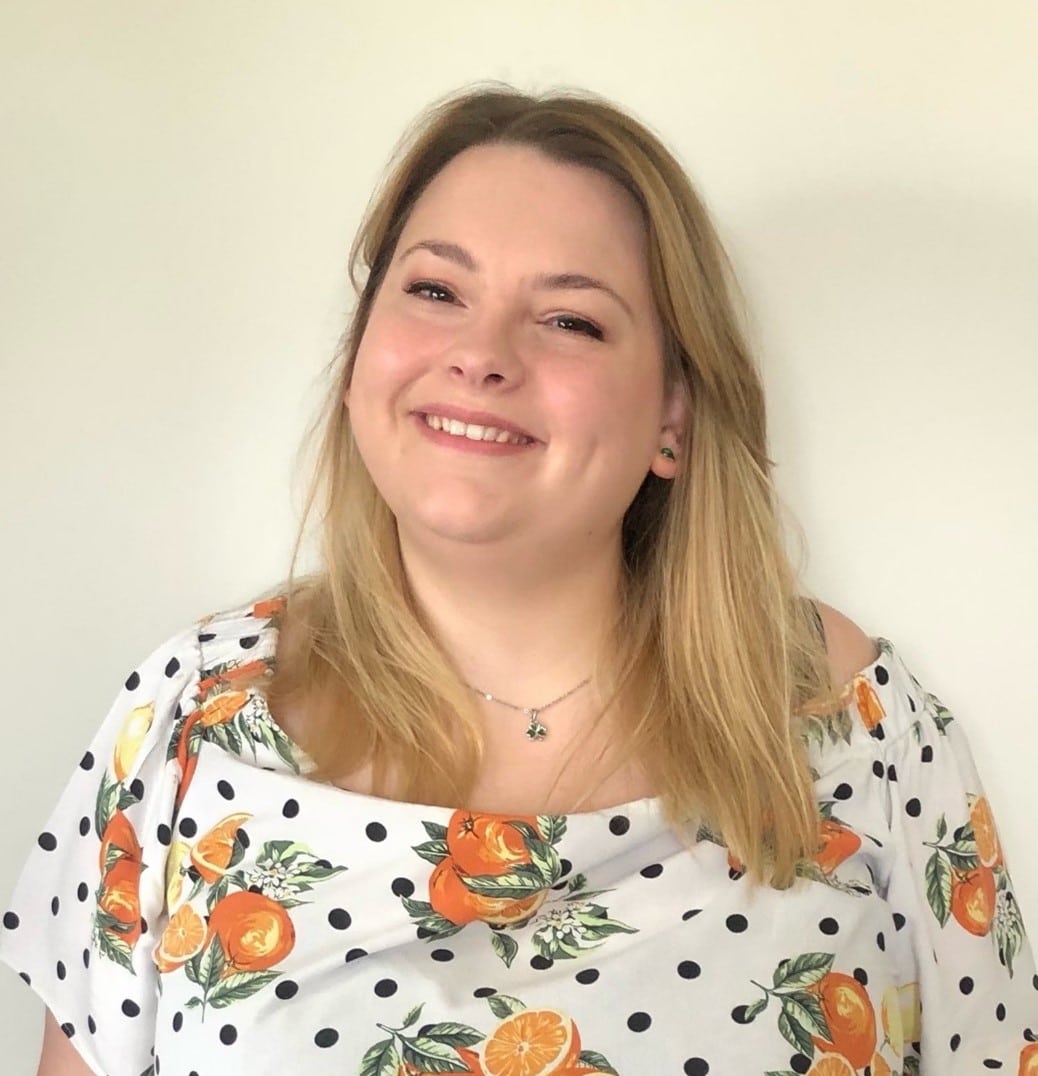
Jasmine Blaine: So I am Jasmine Blaine, I’m a DPhil student in the Department of Psychiatry, which is just a way of saying a PhD student. And I work in the Oxford Brain Health Clinic.
Emily: Okay, you’re working on a really cool project. Can you just walk me through what you are doing?
Jasmine: So in the Brain Health Clinic, it’s a joint clinical and research assessment service for NHS patients who are worried about their memory. And we aim to sort of bridge the gap between all the advances that are happening in the research world and what’s going on in clinical settings. And my research is specifically looking at the way we assess memory and thinking.
So at the moment in these clinics, memory and thinking tests are typically done on paper and in-person. But in research, there’s been a lot more advances in terms of the digital test that we can do that can measure more subtle changes in memory and thinking. So I’ve been working with patients about how to adapt these tests into research assessments that suit the needs of the patients and their families and assess the changes they’re interested in.
And from that, we’re hoping to be able to generate ways to predict the changes that someone might experience if they get dementia. So being able to say, for example, like a baby growth chart, this is where you start off. This is where you may end up based on changes that other people have experienced.
Emily: And so right now there isn’t sort of a guide that is just clear on paper that I can be like, hey, I’ve just been diagnosed. How long is it going to take until I can’t live by myself?
Jasmine: Yeah, so at the moment there’s nothing like that. And the reason is because dementia is not a normal part of ageing. It’s a term that describes a group of symptoms that people experience that includes memory loss and changes in thinking. But it can be caused by lots of different diseases.
So the most common is Alzheimer’s disease, but there are other types. And the symptoms that patients experience and the changes and the progression that the rate that that happens can all vary based on what disease is causing the dementia, but also individual factors. So someone’s educational background and things like that can all affect the progression of these changes.
Emily: Why did you decide to take this on?
Jasmine: So my nan Muriel was diagnosed with vascular dementia. And she was the most incredible woman and she lived with dementia for over 15 years, which is incredible. But I think it’s fair to say that, as her family, after the diagnosis, there was a lot of questions. And perhaps not as much help with the expectations of what might happen and how to manage.
And when I spoke to other people in similar situations, there was a lot of other similar experiences. A lot of people felt the same way. For example, I ran a workshop with some people who have memory problems and their family members and asked them about what it was like going to the memory clinic and how they felt it could be improved.
And the group collectively described a feeling of being a bit abandoned after they received that initial diagnosis. And they gave us lots of suggestions of ways to improve it. But in particular, wanting more information about what changes were going to happen to them. And when and making sure that information was personalised. So as she said, this is things like how long until they can’t drive anymore. Can they do their own finances and continue using the computer? How long until they need full-time care and support?
Emily:
Because I can imagine as soon as you get that sort of diagnosis of, hey, you’ve got this type of dementia. It can be a really overwhelming time and very anxiety-inducing for someone.
Jasmine: Yeah, absolutely. It’s not an easy diagnosis to be given. And it’s very, a lot of information in a short space of time. And typically, there’s not a huge amount of follow-up after you’ve received the diagnosis to help you with next steps.
Emily: So let’s do a little role play. Because I believe the statistic is something scary, like, between you and I, one and two, one of us will either have dementia or live with dementia or care for someone with dementia. So not great odds on this podcast.
Jasmine: No.
Emily: So hypothetically, let’s say I’ve noticed some things are going wrong with my memory. And I’ve got to my GP appointment. He said, hey, you’ve got dementia. What happens to me next?
Jasmine: Yeah, so if you went to your GP with some worries about your memory, they would probably do a short test and ask you about the changes you’ve been experiencing. And then if they felt that you would benefit from further investigation, they would refer to the memory clinic services.
And as part of this, patients may be asked to have a type of brain scan known as a CT before they come along for their memory clinic appointment. And then at the appointment, they would again be asked more information about what changes their experiencing, how it affects their day-to-day lives and then do a slightly longer memory test on paper again. And the doctor will look at all of that information when they decide to make a diagnosis.
Emily: But if I come to you at the Brain Health Centre and I’m referred there, then what happens to me?
Jasmine: So as I said, we try to integrate some research advances into clinical practice. So instead of going for a CT brain scan, patients that are referred to Oxfordshire memory clinics can come to us at the Brain Health Clinic, where they can have some more detailed assessment. So this could include a brain scan known as an MRI, which is a bit more detailed.
They can answer some questionnaires, they have the opportunity to do some research tests and provide, for example, a saliva sample so we can look at their genetic information. And then they can also do a slightly more detailed memory and thinking test. So when we think of dementia, we often just think of memory, but actually there’s lots of different types of thinking and cognition that can be affected. So attention is one example, but there’s also language, ability to find the right word, being disoriented. So the memory test that we do at the Brain Health Centre aims to assess a few more of these.
Emily: Can we do a little memory test with something that you would have to do?
Jasmine: Yes, okay, yes, there are lots of different questions you could be asked. These could include things like repeating a sentence, naming some objects or animals, giving you a minute to list as many words as you can that start with a particular letter. But one easy to do example is I’m going to give you three words, and I’d like you to repeat them after me. House, pen, book.
Emily: House, pen, book.
Jasmine: Okay, try to remember these as I’m going to ask you again later. Okay, can you now take away seven from 100 and I’d like you to keep taking away seven from each new number until I tell you to stop?
Emily: I didn’t know I had to sign up for math, okay, this is so embarrassing. Seven from 100 is 93 and then again, it would be 86. And then I want to say 79. Oh, that’s easy, 72. Okay, do I have to go all the way to zero or can we stop here?
Jasmine: No, we can stop that.
Emily: Okay, this is too embarrassing, I feel so much shame.
Jasmine: So then I would say which three words did I ask you to repeat and remember?
Emily: Oh, it was house, pen, book, okay, I know. Number one, I’m very glad I don’t have any early signs of dementia, but that was actually harder when you’re having to then all of a sudden engage like the math side of your brain with the like remember just a simple remembering thing is actually like tricky.
Jasmine: Yeah, then they’re not easy if if everyone could answer all of the questions straight away, then it wouldn’t give us any information that’s useful. So they are designed to be a little bit challenging and the math one is one that lots of people don’t enjoy, but it’s a great way of distracting someone between the questions that we’re asking them to remember and the questions that we’re later saying ‘what do you remember about that’ so it is it is a challenging one.
Emily: So, okay, so now once I’ve done all my tests and you have all your information that you can go off of what are you able to then do with that and sort of like answering my questions like ‘when do I have to stop driving’ or ‘when do I need to have a care or come in and take care of me’.
Jasmine: So at the moment, what happens is all the information that we collect at the brain health clinic goes to the memory clinic doctor and they’ll review it before making a diagnosis. And then they may receive one or two follow up appointments at the memory clinic, depending on the policies of the clinic, which they attend.
And they may be referred to something like a charity, which can provide some practical advice on, you know, support groups that are available, but generally patients will just go back to their GP for the long-term management of symptoms and medication. And currently, we’re not able to provide a huge amount of information and what will happen to them from that point.
Emily: And if you try to get a GP appointment, you can know how difficult it can be to try convey nuance in that 15-minute window you have with them.
Jasmine: Exactly, and because the memory clinics are so stretched, its not possible for the specialist in that area to be able to offer these follow up appointments where we can track what changes someone’s experiencing and then predict what changes they may experience. So that’s really where my research is trying to come in.
Emily: And so at the brain health clinic in Oxfordshire, that’s kind of what you are trying to do is offer a more tailored experience for somebody who’s going through an individual health crisis.
Jasmine: Yeah, exactly. So my specific area of research that I’m interested in is looking at ways that we can integrate these more advanced clinical and memory and thinking tests to find out how someone is changing. And then follow up with people after the point of diagnosis to see how they continue to change in the months and years following a diagnosis.
So I worked with people who have first-hand experience of dementia themselves or through a loved one and we found a way to make these studies work for them in a way that takes into account their preferences and needs, and this really led to a flexible design of a study which allows patients to choose how they get involved and what they want to do.
So this could be for some people a telephone call every six months where they answer questions about their driving and daily activities and for other people that could be those online tests which can provide more sophisticated details about the changes over time. And then from that hopefully we would be able to use that information to predict for future patients that are coming through what changes they might be able to expect.
Emily: I don’t mean to like put a timeline on this but like what is your hope of when you’d be able to sort of like get that baby grow a chart together and give it to like a clinician to be actually able to use it in a setting that would be really helpful.
Jasmine: It’s a really difficult one to answer. Right now my focus is on ways that we can make sure this works for patients. There are concerns about like online task for example with people not having access to technology like laptops or smartphones or not wanting to use them.
So right now we want to see if this is feasible and can work in this patient population and then, yeah, it would be great at some point to them be able to use that information to create these baby charts or something that can help us predict what changes someone might experience and when and then keep updating that as they continue on living with dementia diagnosis but at the moment a timeline on that is not easy.
Emily: OK don’t worry about it, pressure off. What do you think your grandmother Muriel would say about your project?
Jasmine: Oh that’s a really tricky one. I think she would be proud of me doing something in this area I know that her children have said that this is something that they resonate with that this is matches their experience and this is something that they would have liked back when they were going through this process so yeah I think she’d have a lot to say but yeah hopefully all good things.
Emily: OK so before you go can I just say one final thing to you house pin book yes nailed it nailed it.
This podcast was brought to you by Oxford sparks from the University of Oxford with music by John Lyons and a special thanks to Jasmine Blaine.
Tell us what you think about this podcast you can find us on the internet we are at Oxford Sparks or you can go to our website Oxfordsparks.ox.ac.uk.
I’m Emily Elias. Bye for now.